
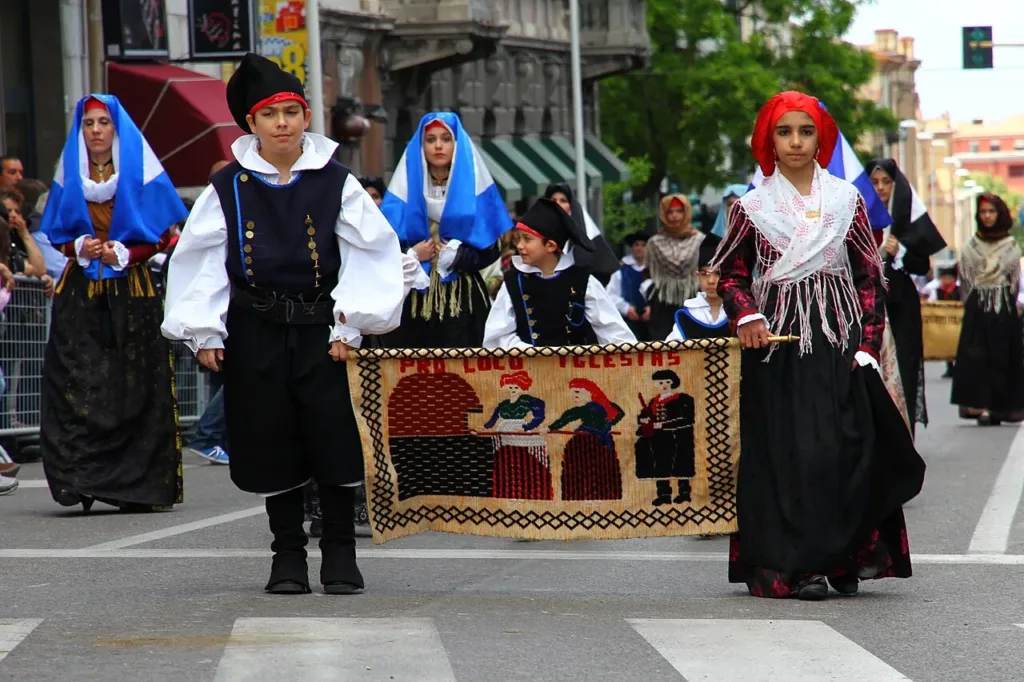

Speaking of traditional dress in Iglesias as a single costume can obscure its most interesting feature: variety. Fabrics, head coverings, skirt shapes and accessories change, as do the social circumstances and stages of life to which particular combinations refer. A first encounter with this heritage can begin with those differences, rather than searching for one outfit capable of representing every person and every occasion. The ensemble matters as much as each individual garment.
The three photographs accompanying this article show dress from Iglesias at the Cavalcata Sarda in Sassari on 19 May 2013. They document a public presentation of tradition, not nineteenth-century everyday life or the displays inside the town's museum. That distinction helps explain what is visible. Clothing is being worn and moves through the space of a parade, whereas a museum collection provides another way to examine the construction and detail of individual objects.
A clothing vocabulary shaped over time
Sardegna Digital Library explains that Sardinian traditional clothing emerged through changes between the sixteenth and late nineteenth centuries. Local variety developed through combinations of shared elements, rather than from a model that remained untouched for centuries. In Iglesias, asking which variation an outfit represents is therefore more useful than simply calling it old. Its form embodies adaptations and social distinctions, alongside the practical work required to make, maintain and pass on the garments.
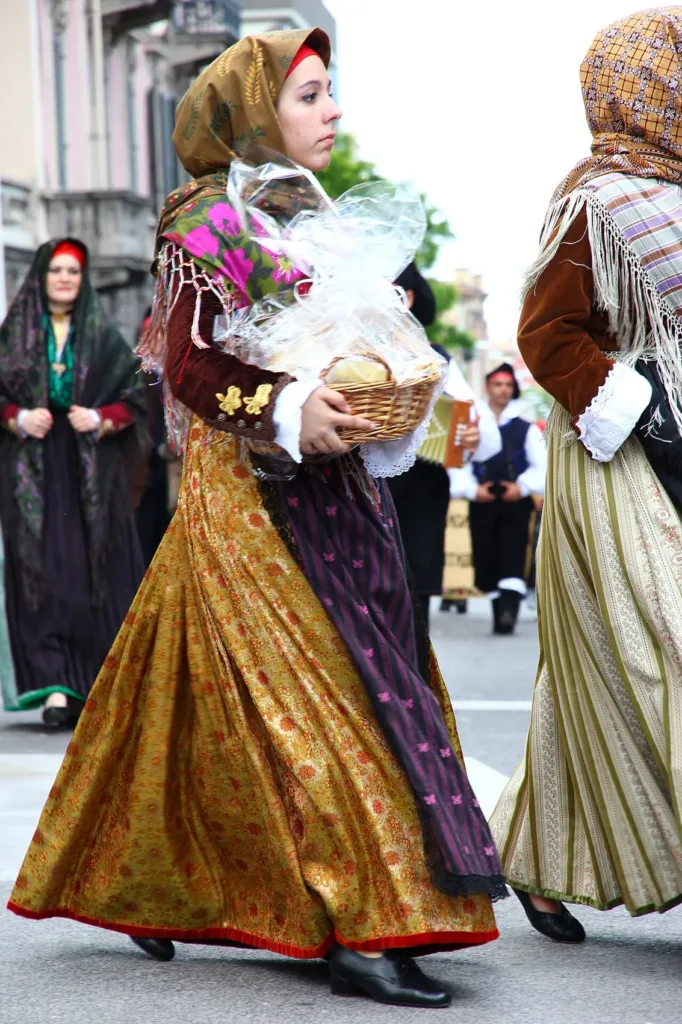

Sardinia's regional museum directorate notes that colours, textures and clothing forms helped indicate geographic origin, occupation and social position. Festive occasions now make particularly elaborate outfits highly visible. That does not mean every garment was intended for gala wear: everyday clothing answered different needs. Watching a parade provides an introduction, but it cannot encompass the whole history of household practices and family customs that supported the clothing before it became a publicly presented heritage.
Comparing Nostrada and Massaia ensembles
The Pro Loco's documentation distinguishes Nostrada dress, associated with bourgeois and noble women, from Massaia Antiga dress, connected with women landowners. For the Nostrada it describes a full skirt, a fitted upper garment and the characteristic white and blue mantilla; for the Massaia it records a pleated skirt and another arrangement of head coverings. Identifying an ensemble consequently requires more than noticing the colour of one piece. Construction and the relationships between garments are essential.
In the photograph concentrating on women's clothing, compare glossy and matt surfaces, the folds of the skirt and fabrics layered over the shoulders. Hands holding flowers also make the volume of the sleeves especially apparent. This is a visual comparison, not an automatic assignment of social identity to the people pictured. Precise identification of a variant requires documentation of the complete outfit and the contribution of those who preserve knowledge of how its parts belong together.
Men's clothing and the importance of detail
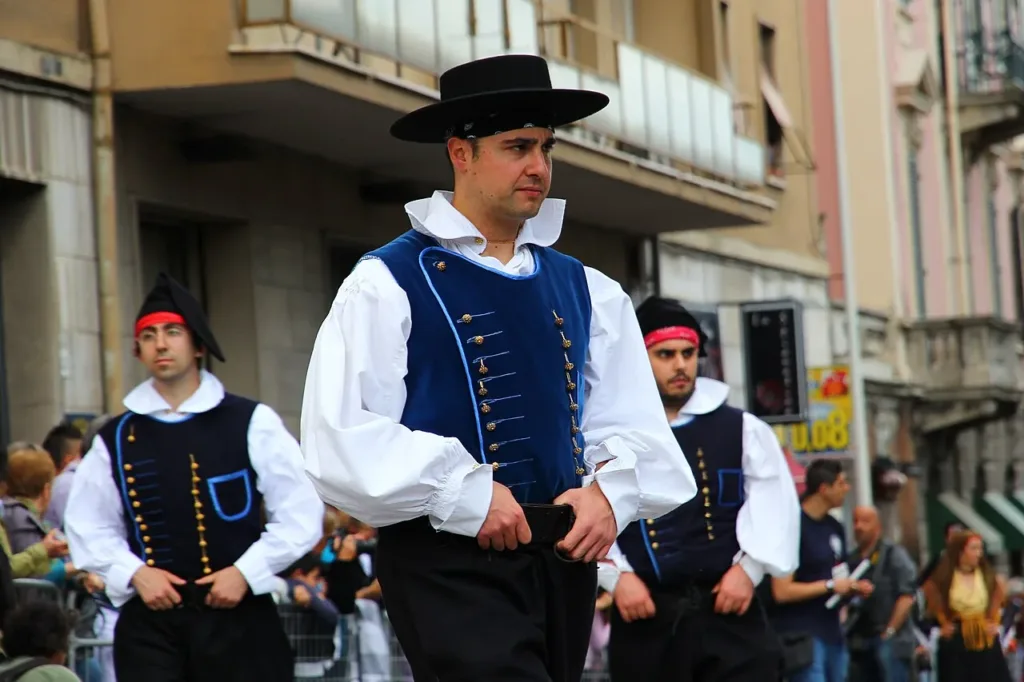
The Costume Museum also presents men's dress, in which the white shirt, waistcoat, jacket, trousers and headwear form distinct components. In the photograph reproduced here, the blue waistcoat, arrangement of buttons and dark broad-brimmed hat are especially noticeable. The white shirt creates a bright contrast with the rest of the outfit. This view allows attention to proportions and overlapping garments without reducing men's clothing to a background accompaniment to the women's ensembles in the parade.
Looking at smaller elements also changes the way jewellery is understood. Buttons, brooches and pendants occupy different positions and do not all perform the same task. According to the regional description, precious objects have a dedicated display in the museum. Seeing them separately helps reveal the shape of an individual item; finding them again within a worn outfit shows how they affect its overall balance, the rhythm of decoration and the appearance of the surrounding cloth.

From family preservation to a museum visit
The museum opened in 2019 through the collection assembled by maestro Priola and donations from families in Iglesias. Its displays also include domestic working objects such as a loom and storage chests. Their presence places clothing within a material culture of making, care and preservation. The geographic reference for this article is the Costume Museum directory entry in central Iglesias, which connects the subject with a place where that heritage is presented.
For bookings, consult Iglesias Turismo. Its page gives Via Giuseppe Mazzini 2 and visits by reservation through the tourist office, whereas the regional entry lists Via XXVII Marzo. Confirm the entrance when making contact. Bring a specific question, perhaps about differences between festive and everyday outfits. This helps move beyond admiration of colours towards understanding the people, practical skills and choices through which the clothing has been handed down.