
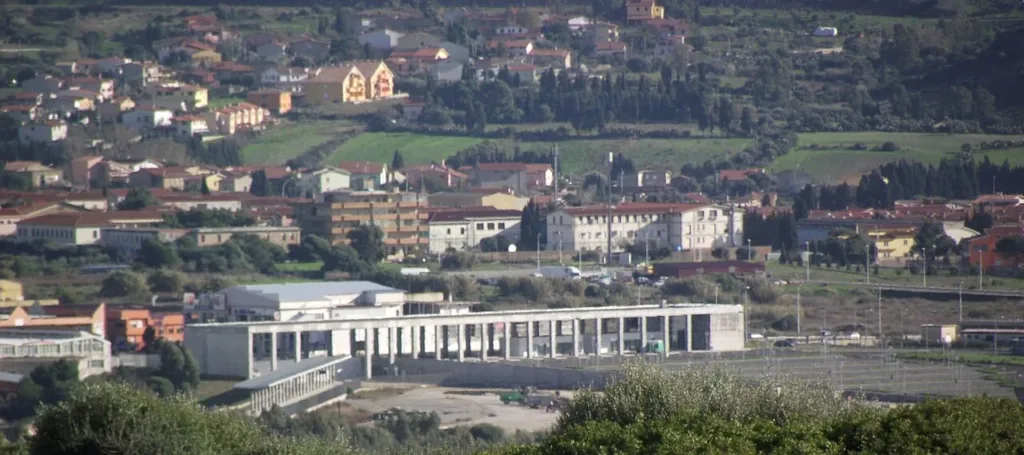

Carbonia Serbariu's transport interchange is recognisable by its long roof and regularly spaced columns. Its horizontal profile can also be seen in the panoramic photograph taken from Monte Sirai in December 2010, before the opening. It is worth observing as contemporary architecture, but it is above all a place to understand when planning a journey. The arrangement of the building and the organisation of transport services need to be considered together.
There is an essential travel update. When checked on 23 September 2026, RFI reported suspended rail services at the affected Sulcis locations until 31 March 2027, with Carbonia's replacement buses stopping at the interchange. Check the notice and current booking information before departure. Photographs of railway infrastructure show the place, but they do not establish which services are operating on your travel date.
A new entrance to Carbonia
The Ministry of Culture's architectural census dates the design to 2005–2007 and construction to 2007–2011, recording the opening on 23 July 2011. Contributors included Luigi Snozzi, Willi Hüsler and the University of Cagliari team. The intention was to connect modes of transport and routes while bringing the terminal closer to town. It was therefore a broader urban intervention than adding a shelter beside an existing railway platform.

The city's tourism portal places the complex between Via Roma and the route near Via Costituente. In its 2023 announcement concerning new city entrances, the Municipality identifies Via Roma as the approach from the interchange and the mine. This relationship helps explain the setting. The station forms part of Carbonia's urban access network, while the former mining area remains a nearby but separate cultural destination with its own organisation.
Reading the repeated columns
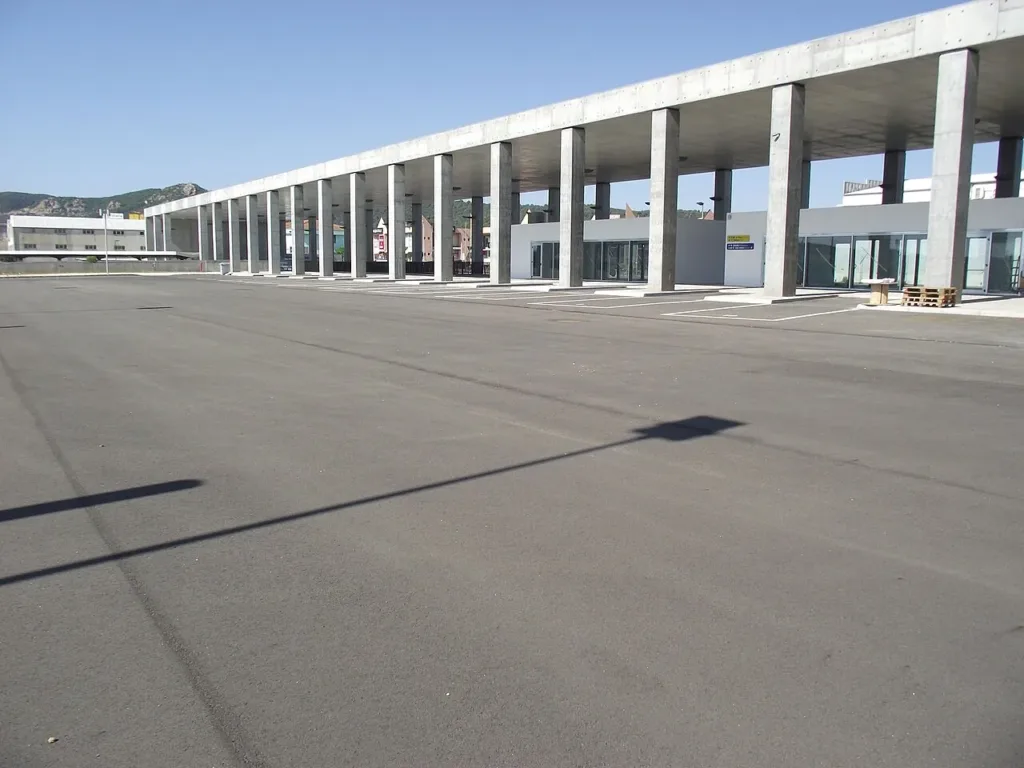
The architectural census describes a reinforced-concrete roof approximately 129 metres long and 19 metres wide, defining a covered pedestrian space. In the photograph of the bus forecourt taken in July 2011, repeated supports create a particularly clear sequence. Vertical surfaces alternate with open intervals, allowing the depth of the structure and the length of its front to be understood at the same time.
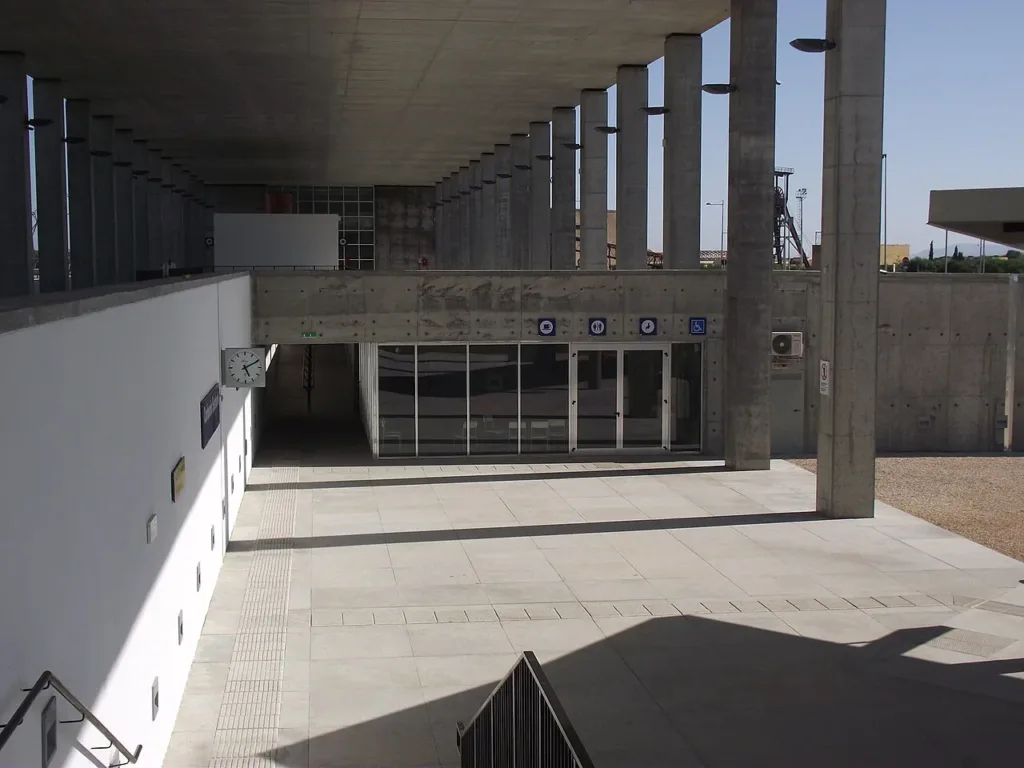
The August 2011 photograph of the entrance to the railway waiting area shows a change in level. The route descends from the upper space, with stairs, walls and the roof framing the entrance. It helps explain how circulation was arranged across different heights. It cannot, however, certify the present condition of lifts, facilities or accessible routes. Those details should be checked with the operators according to the requirements of the individual traveller.
Finding the appropriate bus service
The ARST Carbonia Centro Intermodale stop has the reference code B_8100. Its summary lists regional connections, including routes towards Iglesias, Calasetta, Portoscuso and other Sulcis destinations. This is a useful starting point for opening the individual timetables. A destination appearing in the list does not mean that every departure serves it on every day of the week.
A regular regional bus and a railway replacement service may use the same transport node without sharing ticket conditions or operating arrangements. Check the operator, direction, stop stated in your travel information and operating days. When planning a connection, allow time to identify the correct bay. Reading a departure time without its validity dates and notes can mean choosing a school-day or weekday service for a day when it does not operate.

Arriving with current information
The Carbonia Serbariu station directory entry locates the complex on the map. It does not replace temporary instructions on site. A municipal order issued in May 2026 for photovoltaic canopies introduced parking restrictions in specified areas until the work was completed. Before leaving a car, check current signs and instructions rather than assuming that apparently empty space is available for parking.
For visitors interested in the city itself, the interchange also introduces the relationship between infrastructure and public space. A trip to the Coal Museum is a separate activity, with its own entrance and visiting arrangements. Here the central subject is movement: recognising the building's levels, distinguishing services and consulting current information makes the interchange easier to use while providing a better understanding of its architectural form.