
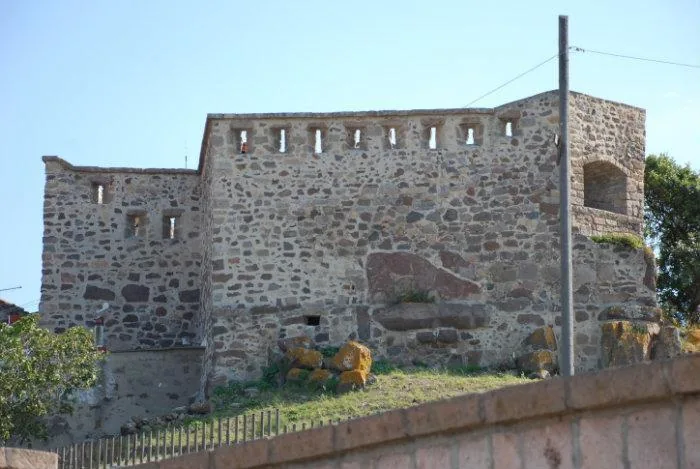

Forte Su Pisu stands on elevated ground above the basilica of Sant'Antioco. Its compact walls belong to nineteenth-century military history, although the surrounding landscape preserves much older remains. A useful way to understand the building is to begin with a practical question: what threat was a fort so close to people's homes intended to confront? The answer concerns corsair raids and the need to provide shelter for both a garrison and the local community.
The Forte Sabaudo Su Pisu directory entry locates the monument. The word Savoy identifies its political and historical context: this is neither a Spanish coastal tower nor a medieval castle. Proximity to other monuments should not collapse the differences between their periods. This article follows the defensive project and the events of 1815, leaving the hill's other historical phases to separate accounts devoted to those subjects.
A call for protection after the raid of 1812
The municipality's 2025 Monumenti Aperti brochure connects construction with demands for protection following the raid of 22 July 1812. Residents urged the Savoy government to take action in defence of their community. The fort therefore arose from an immediate practical need rather than a commemorative programme. It was intended to provide resistance and refuge in a territory exposed to landings and raids from the sea, where an attack could rapidly threaten civilian life.
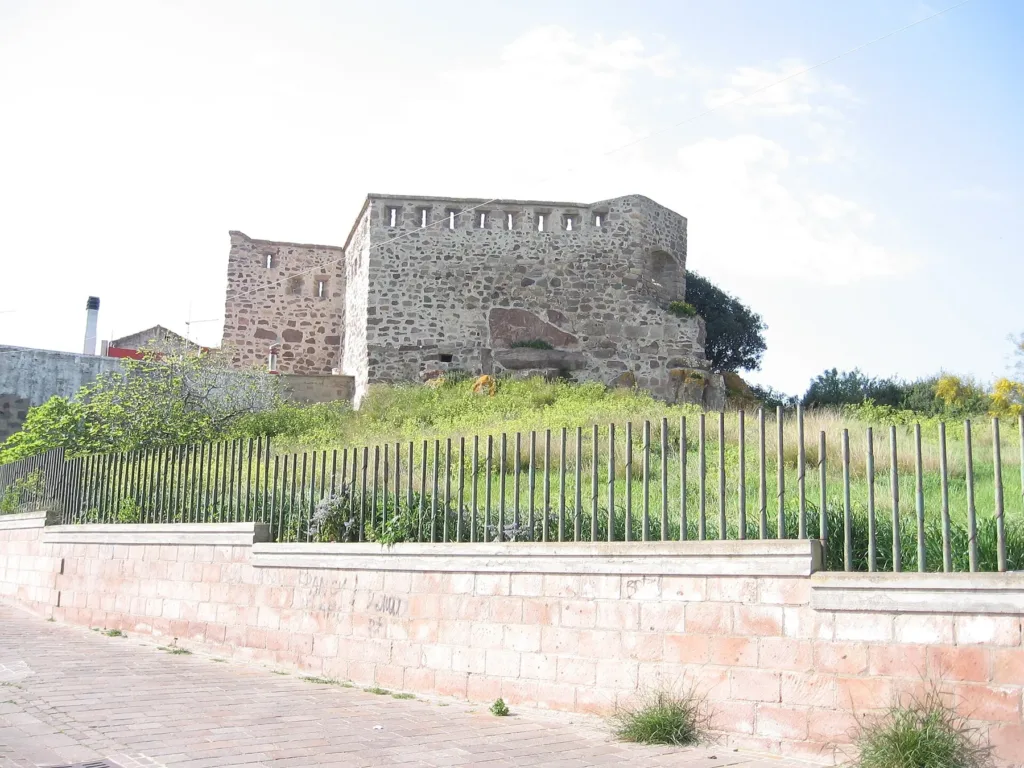

Municipal documentation attributes the 1812 design to Sardinian artillery officer Ambrogio Capson and places construction between 1813 and the summer of 1815. Distinguishing the design from the building works helps explain these dates. The fort was completed shortly before the attack that made it historically prominent. Only a short interval separated completion from its most dramatic military test; the building did not enjoy a lengthy period of peace before confronting the danger it was intended to address.
Reading the walls from outside
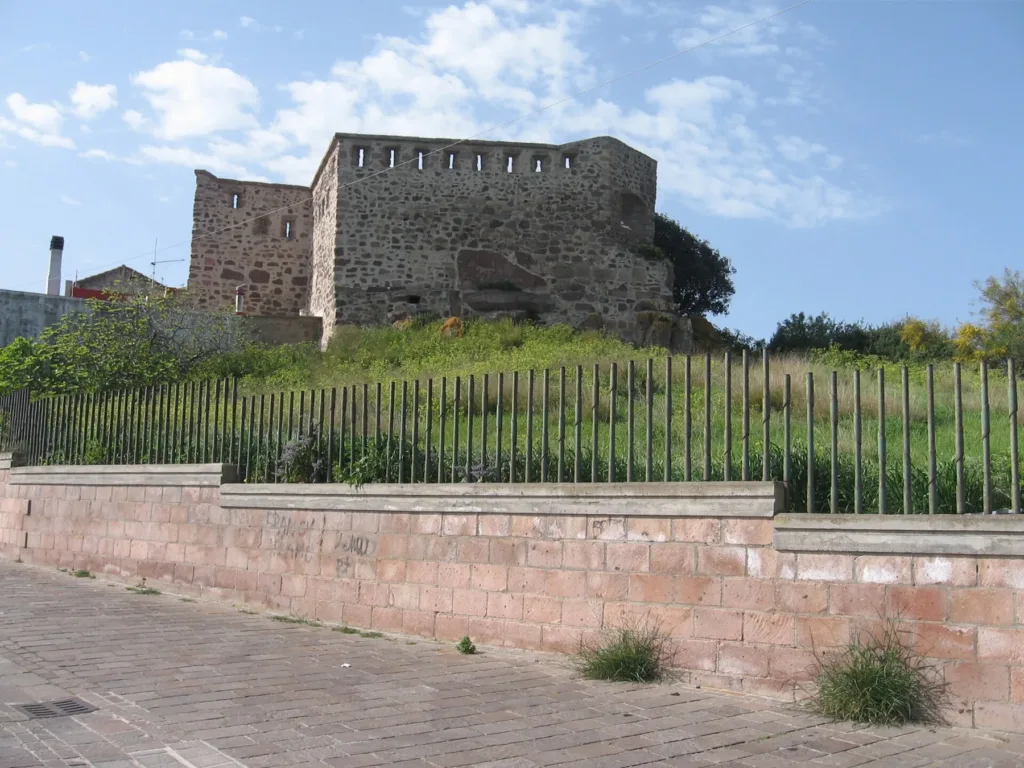
The photographs show a compact stone building with a series of narrow openings high in the walls. Its masonry mass dominates the raised ground beneath it. From this external viewpoint, the relationship between protection and observation becomes clear: the building encloses an interior while retaining openings towards the outside. Its character depends on that combination more than on ornament or on an entrance designed to display the prestige of an individual owner.
Views taken from different distances help distinguish the fort's volume from the fencing and arrangements around the present approach. Not every feature visible in front of the walls belongs to the nineteenth-century building campaign. Equally, a photograph of the preserved monument does not automatically reproduce its appearance during the siege. The surviving structure, later interventions and historical reconstruction of events should be considered separately, without assigning an unverified original purpose to every visible stone or opening.
The attack in October 1815
The account published by the municipality describes a fleet arriving from Tunis and the assault on 16 October 1815. Efisio Melis Alagna commanded the defence. Some residents sought safety outside the settlement, while other civilians took refuge in the fort alongside the soldiers. The building thus assumed the role for which it had been requested, as the community faced a danger involving both armed defenders and people who were not participating in the fighting.
Resistance did not prevent capture. Melis Alagna was killed, and many people were taken prisoner and carried to Tunis. An account of the episode should not focus exclusively on the commander: the capture of civilians was central to the raid's consequences. Introductory sources may differ over details of the fighting. The documented core remains the fall of the defensive position, the commander's death and the wider impact of the attack on the people of Sant'Antioco.

A place of memory within a wider setting
The fort now connects a recognisable surviving building with a specific historical episode. Its elevated position explains the advantage of observation, but the events of 1815 also show that a defensive post was not self-sufficient. Personnel, ammunition, communication and the possibility of assistance mattered alongside walls. This relationship between architecture and resources gives the monument more meaning than a simple description as a viewpoint, while still acknowledging its visual connection with the surrounding town.
To arrange access, consult current information from the historical archaeological park and the municipality. Opening times for the event described in the brochure applied to May 2025 and are not today's normal visiting schedule. Any interior displays should likewise be checked before planning a visit. Understanding can nevertheless begin outside, by recognising the fort as a practical response to a community's need for protection and as evidence of the human consequences of that period in Mediterranean history.