
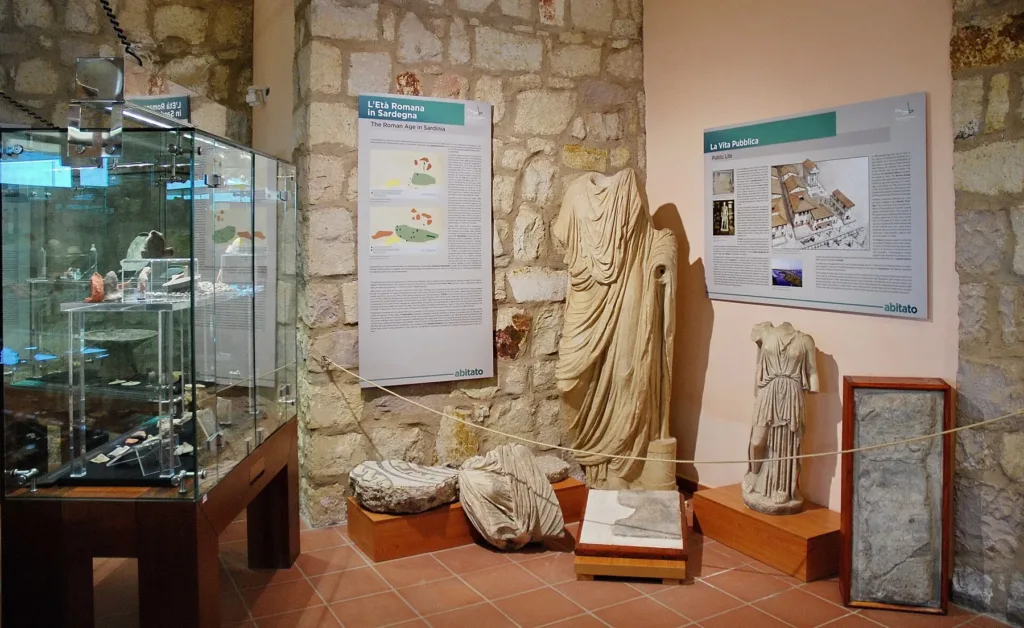

At the Ferruccio Barreca Archaeological Museum in Sant'Antioco, the past of Sulky takes shape through preserved objects, interpretative images and digital tools. The most rewarding question is not simply how old an object is, but how a town can be understood from fragmentary evidence. The museum makes that change of scale possible, moving from material inside a display case to the landscape in which it once had meaning. Following this relationship gives the visit a direction beyond photographing a sequence of attractive exhibits.
The Barreca Museum directory entry locates the building on Via Sabatino Moscati. Known as MAB, it belongs to the town's Historical and Archaeological Park while retaining its own purpose: collecting, studying and explaining evidence from the island. Outdoor sites and museum galleries complement one another. This article concentrates on the collections and their interpretation; the nearby sanctuary has its own separate account devoted to the tophet, rather than being retold here.
A collection with several homes
The history published by Virtual Archaeology connects the collection with excavation campaigns that began in 1956. Objects subsequently occupied different premises, including the town's Monte Granatico during the 1980s. The present building was constructed in 1973, but its inauguration came at the end of 2005. The interval between those dates reveals how lengthy the process can be between archaeological discovery and a museum space made available to the community. A collection is also shaped by the practical circumstances of its care.

The institution's administrative history adds other milestones. Municipal regulations record its establishment in 1995 and the decision to name it after Ferruccio Barreca in 1999. These dates do not replace the opening date of the present premises: they refer to the institution and its name. Keeping the building, the collection and the municipal organisation distinct resolves the apparent contradiction of a museum with several foundation dates. Each date describes a different part of the same public history.
Looking at objects before reconstructions
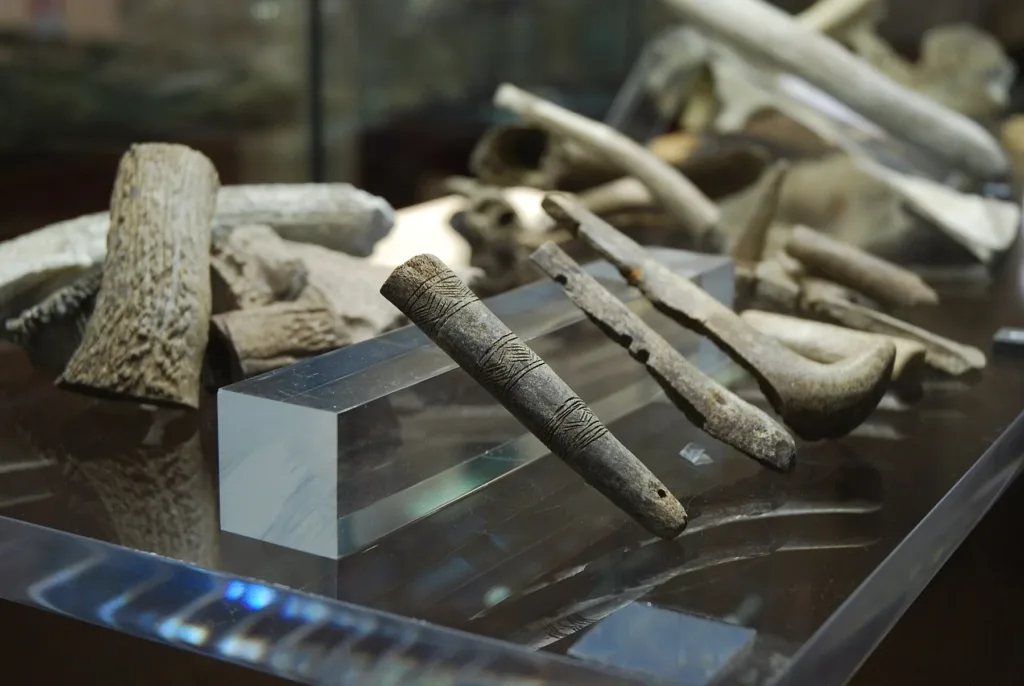
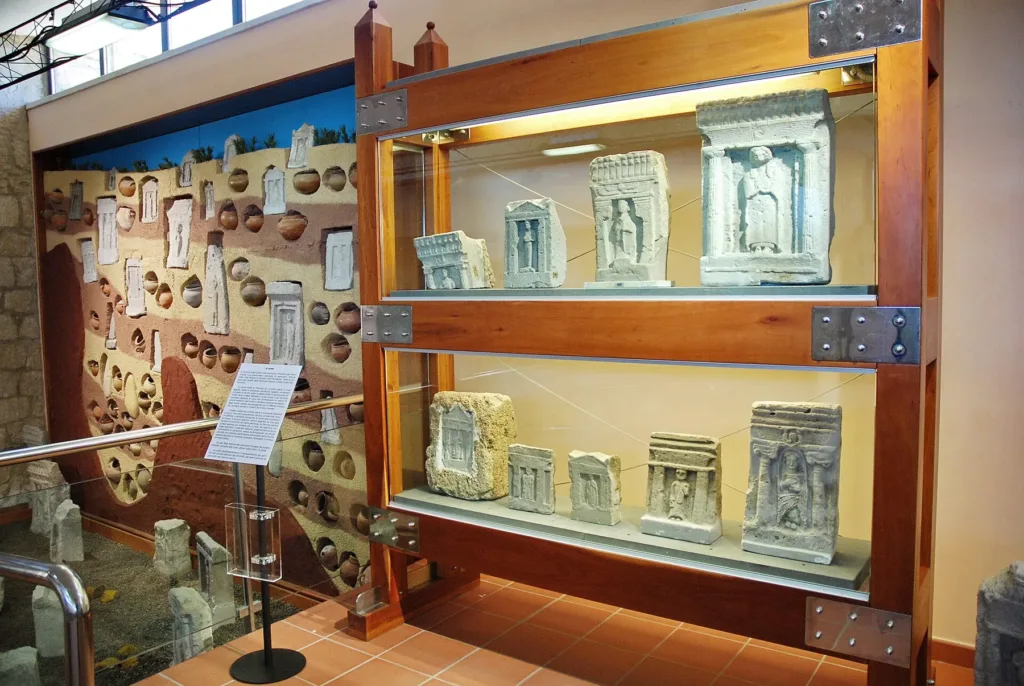
The historical photographs accompanying this page show cases, sculptures, stelae and smaller archaeological objects. They record earlier displays and do not guarantee that each object occupies the same position today. Nevertheless, they suggest a practical way of looking: compare surfaces, proportions and traces of manufacture, then consult labels for provenance and dating. An apparently modest piece may provide evidence that differs from a more visually striking sculpture. Archaeological importance and immediate visual impact are not necessarily the same thing.
Provenance deserves particular attention. Objects from a settlement, a burial or a sacred area do not automatically document identical social practices. A museum brings evidence together to explain it, but proximity in a gallery does not mean that two objects originally belonged together. Panels help visitors recover those differences. A useful question for a guide is which associations were recorded during excavation and which are comparisons introduced to clarify forms or possible uses. This keeps interpretation connected to the circumstances of discovery.
The town on an interactive map
The Park describes a multimedia room where a touchscreen lectern controls a large wall projection. Its interactive map combines location and chronology, extending from prehistoric periods to Mediterranean connections during the first millennium BC. Highlighted features include a time-lapse presentation of the town's development from the Punic period into Roman imperial times and a three-dimensional reconstruction of the Corongiu Murvonis nuragic complex. These presentations provide orientation; they are explanatory tools rather than original archaeological objects preserved from the periods they represent.
Comparing the display case with the screen is the crucial step. A reconstruction restores continuity to evidence that excavation often preserves only in fragments. It should therefore be understood as an interpretation supported by data, rather than a photographic record of the past. After viewing a digital scene, mentally returning to the objects helps separate surviving evidence from reconstructed elements. With children or a mixed group, the distinction can become a straightforward question: what is physically preserved here, and what are we rebuilding in our understanding?

Planning time at MAB
The official accessibility page identifies parking beside the entrances on Via Sabatino Moscati and describes museum spaces without architectural barriers. Visitors with particular requirements can contact staff beforehand and explain the assistance they need. Consult the Park's opening times and tickets page for current arrangements. Admission options may cover several areas, while the time worth reserving for the collections depends on how closely you wish to study them. A combined ticket need not turn every stop into a race.
Three threads are enough to shape a personal visit: the collection's history, the provenance of a few selected objects and the relationship between material evidence and reconstruction. There is no requirement to give every panel equal attention. Spending time with several examples and understanding their context makes the ancient town more recognisable after leaving the galleries. The distinctive value of the Barreca Museum lies in connecting evidence with interpretation while keeping the questions asked by archaeological research visible to its visitors.