
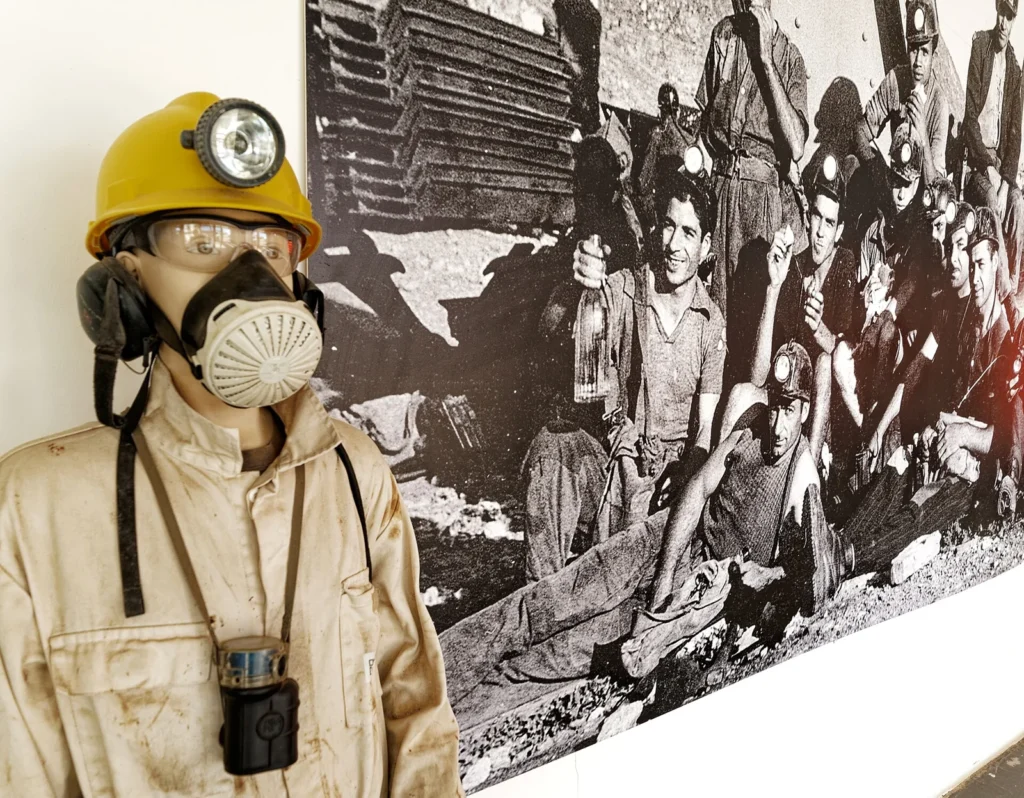

Carbonia’s Coal Museum is part of the Great Mine of Serbariu. When planning a visit, distinguish the museum’s usual layout from the route available during renovation work. The underground guided tour and the museum displays are different parts of the experience, so checking both helps you book with clear expectations.
The visit during renovation work
The museum’s official information page refers to renovation work in 2024–2026. It lists a temporary reception area, a selection of objects on display and the closure of the Lampisteria and Winch Room. The underground guided tour remains central to the visit. These details were checked on 20 September 2026; reopening arrangements may change. Consult the operator’s current visitor information before travelling.
Understanding the different spaces
The Italian Ministry of Culture lists the Lampisteria, underground gallery and Winch Room as the museum’s principal spaces. They serve different purposes. Displays allow time to examine objects, while an accompanied underground route connects working spaces with the guide’s explanations. The number of open rooms alone does not tell you what the visit will offer.
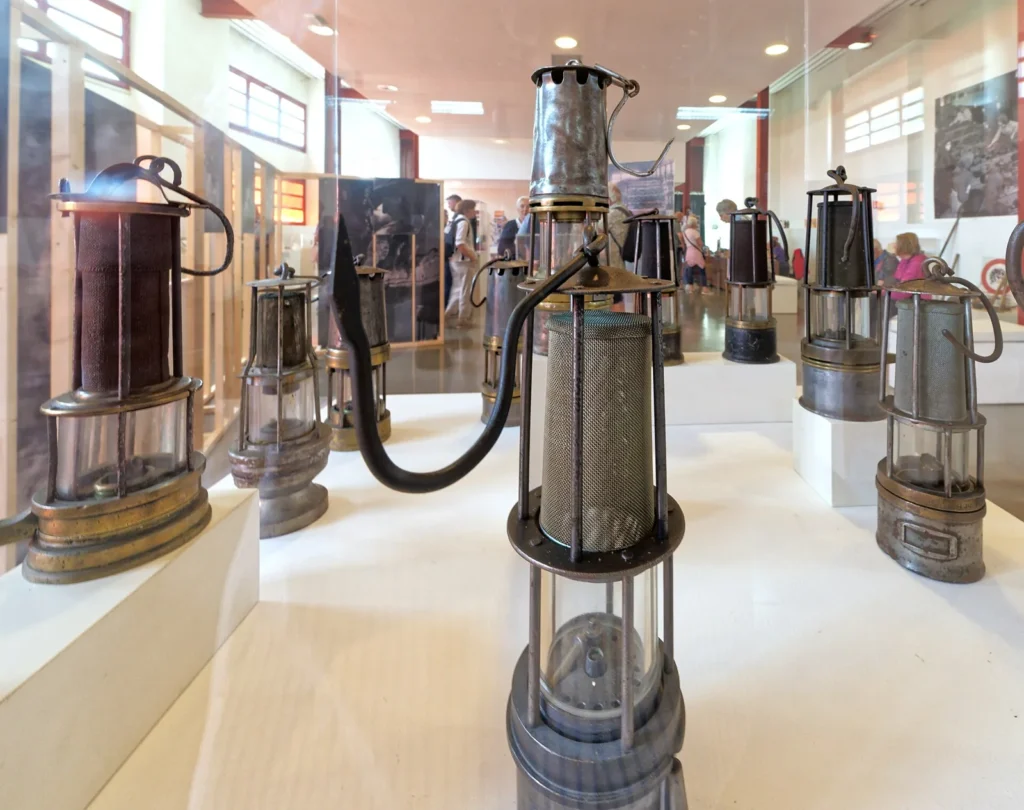

One useful way to follow the tour is to ask what problem each piece of equipment solved. Lighting, movement and underground work then become questions to explore with the guide. You do not need specialist mining knowledge to take this approach.
Booking and getting ready
The museum’s notice about temporary arrangements places reception in the Auditorium building and asks visitors to book. Check the date, tour language and meeting point before confirming. Locate the museum reception rather than relying on a general pin for the entire mining complex.
The operator recommends comfortable clothing and sports shoes. If you have mobility requirements, ask specifically about the route currently available: renovation work can affect access. Describe the assistance you need for individual stages rather than relying on a general accessibility label.
Reading the equipment as a connected system
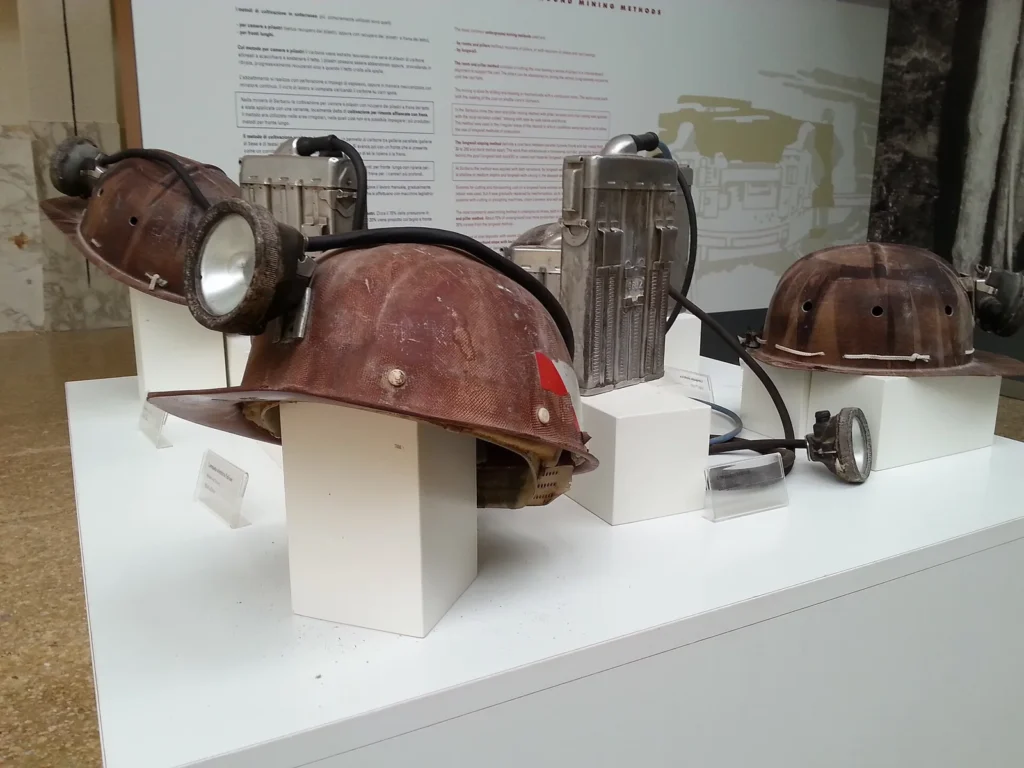
A useful way to approach a mining museum is to connect individual objects rather than treating them as a collection of isolated machines. A lamp addresses the problem of visibility; transport equipment concerns the movement of people or materials. When looking at an object, try to work out a sequence: who used it, where was it used, and what task did it help complete? These questions shift attention from the appearance of a machine to the work around it. Use labels and the guide’s explanation to check your ideas rather than guessing a function from shape alone.
Scale provides another useful comparison. Some objects could be carried by one worker, while others belonged to much larger installations. Looking at that difference makes the relationship between an individual worker and the organisation of a mine easier to understand. If a particular room is closed, ask how it connected with the rest of the complex. A photograph or explanation may help reconstruct that relationship, provided you keep a clear distinction between the spaces you have actually visited and those that are temporarily unavailable.

Giving your visit a practical focus
For a family or small group, we suggest choosing one shared question before entering. How did workers find their way underground? How did they communicate? How were materials moved? During the visit, each person can look for something that contributes to the answer. Comparing two observations afterwards can be more rewarding than trying to memorise every technical name. This is a suggested way of following the exhibition, not an additional activity offered by the museum, and it requires no specialist knowledge or equipment.
Plan arrival, ticket collection and the guided departure as separate stages of the day. A booked tour time is not necessarily the time to arrive at the car park. Read the confirmation supplied by the museum and ask how far in advance you should be there. Avoid placing another timed appointment immediately after the expected end of the visit. The photographs on this page document the site and its collections at earlier dates; they do not confirm which rooms or displays are open now. Check the operator’s current programme for that information, especially while renovation arrangements remain relevant.
Find the museum on the map
Open the Coal Museum listing for directions. For a separate chapter of Carbonia’s past, read our guide to Monte Sirai.