

At Iglesias Diocesan Museum, a precious object records more than the skill of its maker. Its shape relates to a gesture, a celebration or a devotional image. A vessel, a textile and an accessory made for a statue invite different questions: how were they used, what materials do they contain, and why were they preserved? Moving from visual appreciation towards function provides a rewarding way to approach this particular collection of religious heritage.
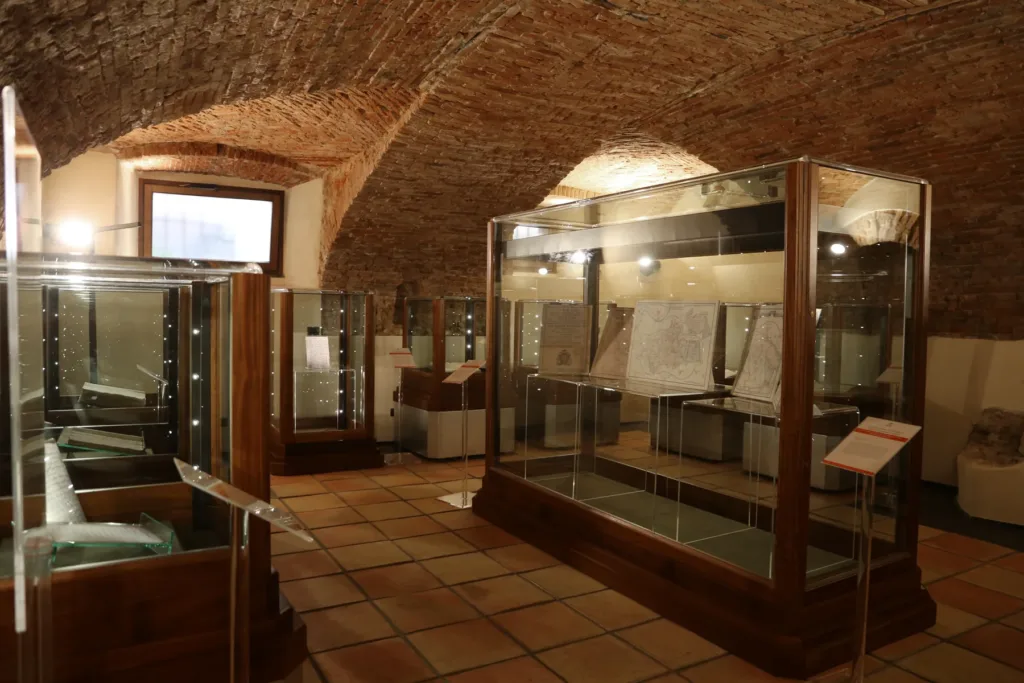
The museum occupies partly underground rooms in the cathedral's apsidal area. The Diocesan Museum directory entry locates it in central Iglesias, around Vico Duomo and Piazza Pichi. The church's architecture is a separate subject; the thread here is movable objects and their presentation. In the room photograph taken in June 2019, display cases stand beneath brick vaults, creating an intimate setting in which individual pieces can be considered at relatively close range.
The collection and the display are different things
SardegnaCultura dates the museum's establishment to 2009, while Iglesias Turismo records the beginning of exhibition activity in November 2013. These identify different stages in the institution's history. Its holdings include much of the Cathedral Treasury, but that does not mean everything is visible simultaneously. The museum alternates groups from its collection with thematic exhibitions. A photograph taken several years ago therefore documents a particular presentation rather than guaranteeing which works will be on display today.

Changing displays can reward a return visit. An object placed beside documents or other artefacts may suggest relationships that an isolated presentation leaves less apparent. Before visiting, ask about the subject of the current exhibition. This is more useful than simply requesting a list of materials, because it clarifies the route chosen to connect evidence from different periods and contexts. The arrangement can influence the questions that visitors bring to a familiar kind of object.
What a liturgical Treasury contains
A diocesan announcement dated 2 August 2019 describes an exhibition of vestments and furnishings selected from the Treasury. It records objects ranging from the sixteenth to nineteenth centuries, with some twentieth-century examples, and mentions conservation work. Vestments and insignia belonged to clothing used in the liturgy, while other furnishings performed different tasks. The variety is therefore not merely chronological. It reflects the separate moments and functions of a celebration, which help explain the forms of the objects.
The same announcement mentions candlesticks, crosses, lecterns and sacred vessels, alongside objects entering the collection from different origins. It is not an inventory of today's display. Nevertheless, it explains why describing everything simply as silverware would be limiting. A shared material could serve objects supporting light, accompanying a reading or containing the Eucharistic species. Recovering that function restores a relationship with use, adding another dimension to the appreciation of workmanship and decorative design.
A mitre and the figure of a bishop
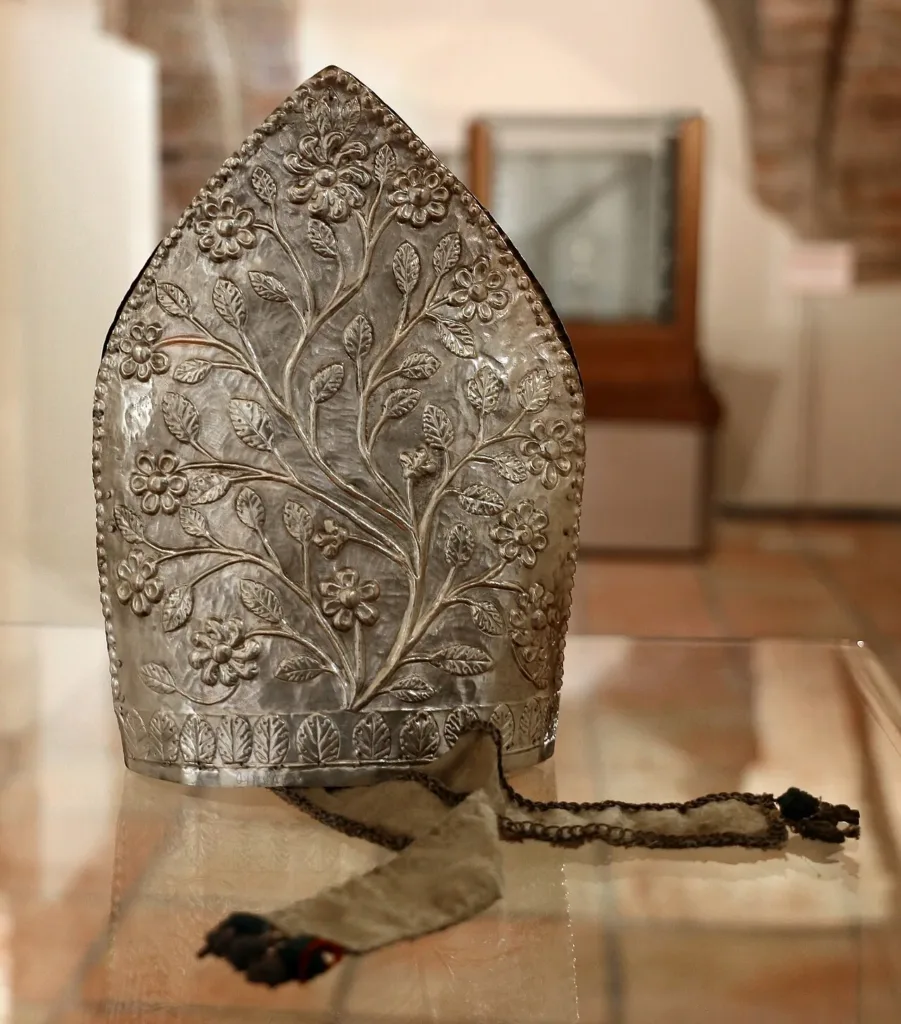
The mitre photographed in the museum has a richly patterned surface, worked borders and different components. Its Commons photographic record identifies it as an accessory for a statue, attributed to a Sardinian workshop between the seventeenth and eighteenth centuries. That information changes its interpretation: it should not automatically be imagined as headwear worn by a person. Its intended use belongs instead to the way a devotional figure was presented and made recognisable within its setting.
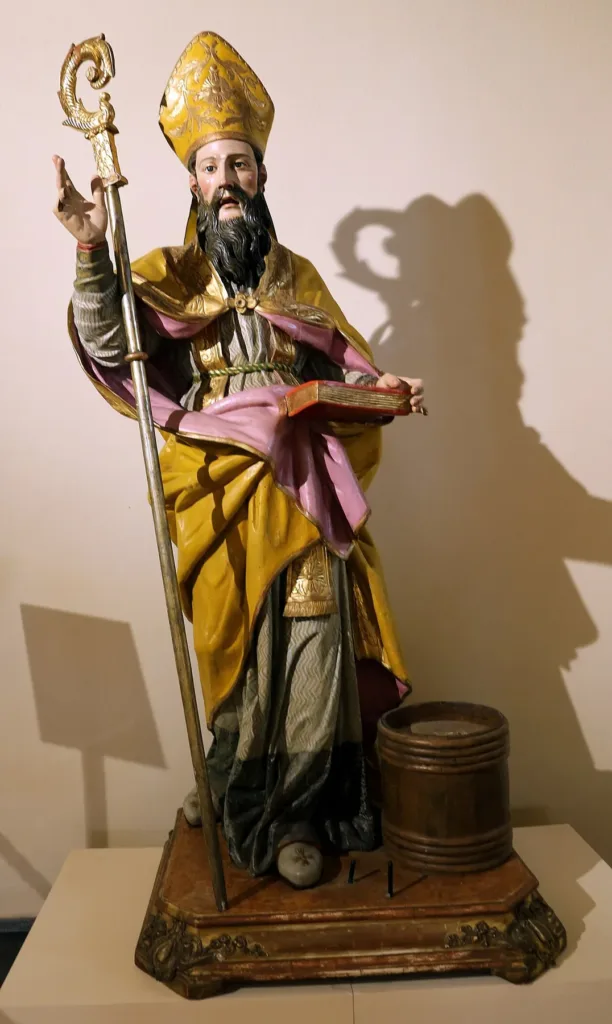
In the photograph of Saint Nicholas of Bari, the head covering forms part of the complete image of a bishop saint. The curved staff, coloured clothing and hand gesture contribute to identifying the figure. The photographic catalogue describes it as an eighteenth-century Neapolitan-school work, photographed in June 2019. Comparing the two pictures distinguishes a separate accessory from a complete figurative composition in which related elements perform an iconographic role and contribute to the meaning of the sculpture.

Looking at materials and preparing a visit
During a visit, compare a small detail with the whole form. Does a plant motif follow a border or spread across a surface? Does the light emphasise relief or colour? The mitre photograph supports this movement between scales, while the statue directs attention towards the position of its arms and the fall of its clothing. These are different ways of looking, suited to objects that do not all communicate through the same material or technique.
The museum relies on diocesan volunteers, and opening arrangements can change. Consult the diocesan page and contact the museum before making a special journey, particularly with a group. Also ask which works are currently displayed: the photographs here document 2019. The value of visiting does not depend on finding every pictured object. It lies in understanding how preservation, religious use and material history relate to the actual pieces encountered in the exhibition available on the day.