

San Giovanni Battista church in Masainas can be approached through two complementary forms of heritage: its building and its parish records. The former preserves architectural arrangements altered over time; the latter records people, sacraments and institutional activity. Holding these perspectives together makes the place more intelligible. The façade cannot tell the entire story, while an archival catalogue is a starting point for investigation rather than a finished account. Even a relatively small church can give visitors and researchers a series of quite specific questions to pursue.
A deliberately cautious date
SIUSA, the Italian Ministry of Culture's archival information system, suggests that the church was built in the sixteenth century, explicitly qualifying this as probable. It also notes subsequent alterations. That qualification matters: the entry provides neither a certain foundation date nor a complete sequence of building campaigns. Automatically assigning every visible feature to the sixteenth century would erase the very changes that make the structure a historical document requiring interpretation.
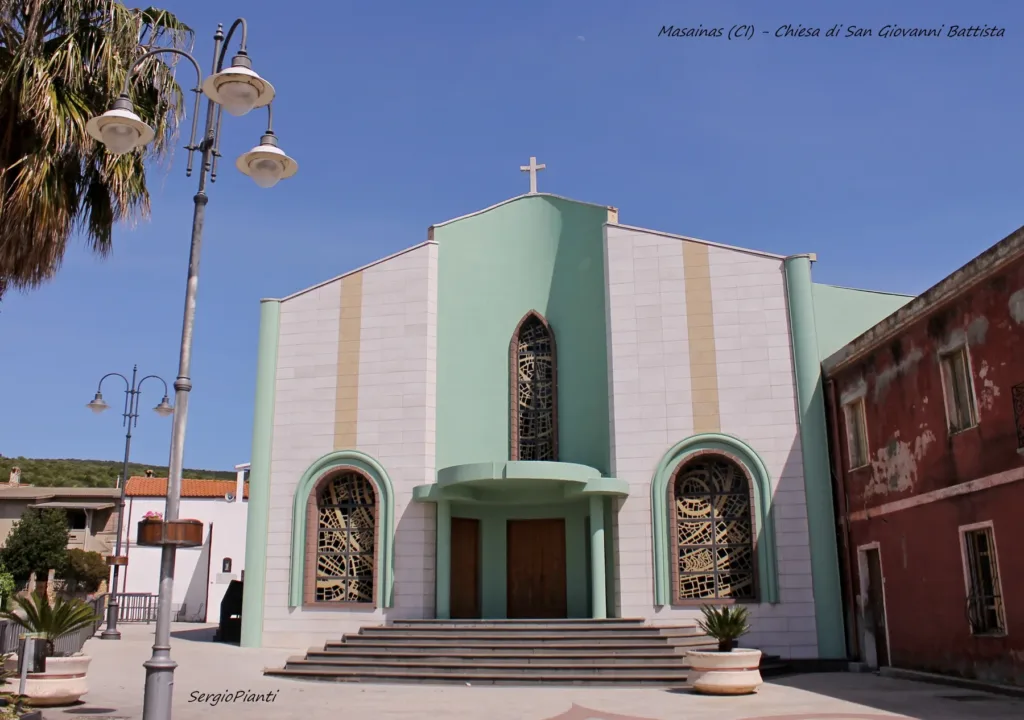
The exterior photograph shows a light-coloured front, a central entrance, tall openings and a sequence of vertical bands. These features can be identified in the image, but their appearance alone does not establish when they were made. Windows may have been altered, plaster renewed and volumes added. Looking at the exterior is therefore a useful first exercise in recognising components, while dating those components requires more detailed documentation or architectural study.
One nave and a sequence of arches
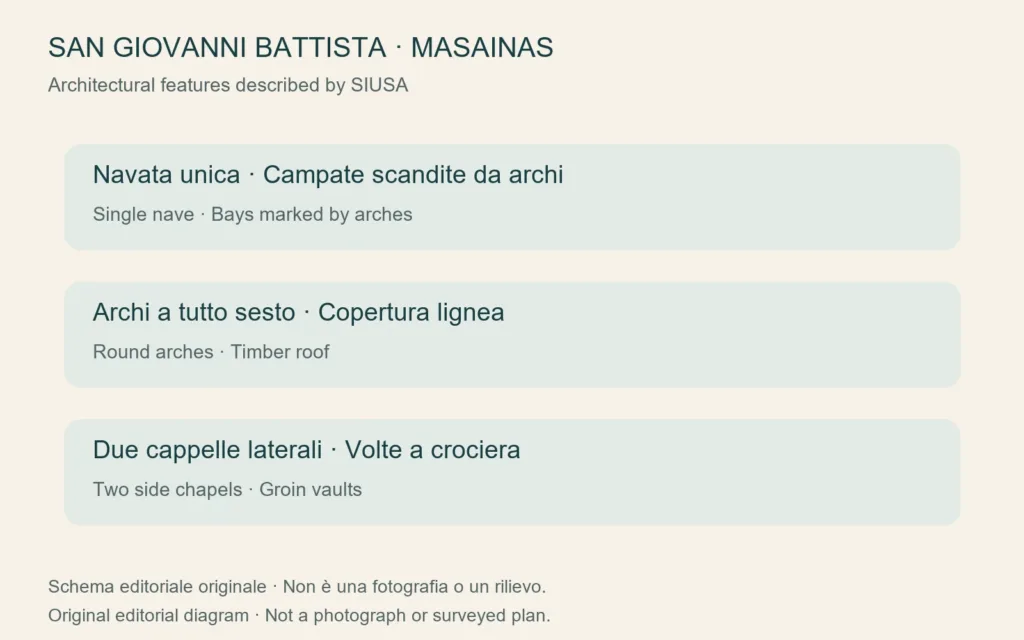
The ministry's description identifies a single nave divided into bays by round arches supporting a timber roof. A bay is a recognisable section of an interior, marked by the repetition of structural elements. At San Giovanni Battista, this sequence helps explain the depth of the main space: the eye moves from the entrance towards the far end through successive intervals. The interior can thus be understood as an organised progression rather than simply one undivided room.
According to the same source, two side chapels have groin vaults. This type of covering results from intersecting vaulted surfaces and differs from the nave's wooden roof. Recognising the distinction helps explain the relationship between the principal space and its subsidiary areas without inventing a reconstruction. The original diagram included here summarises these documented characteristics. It is not an exact floor plan and makes no claim about measurements or the precise relative positions of the chapels.
What the parish archive contains
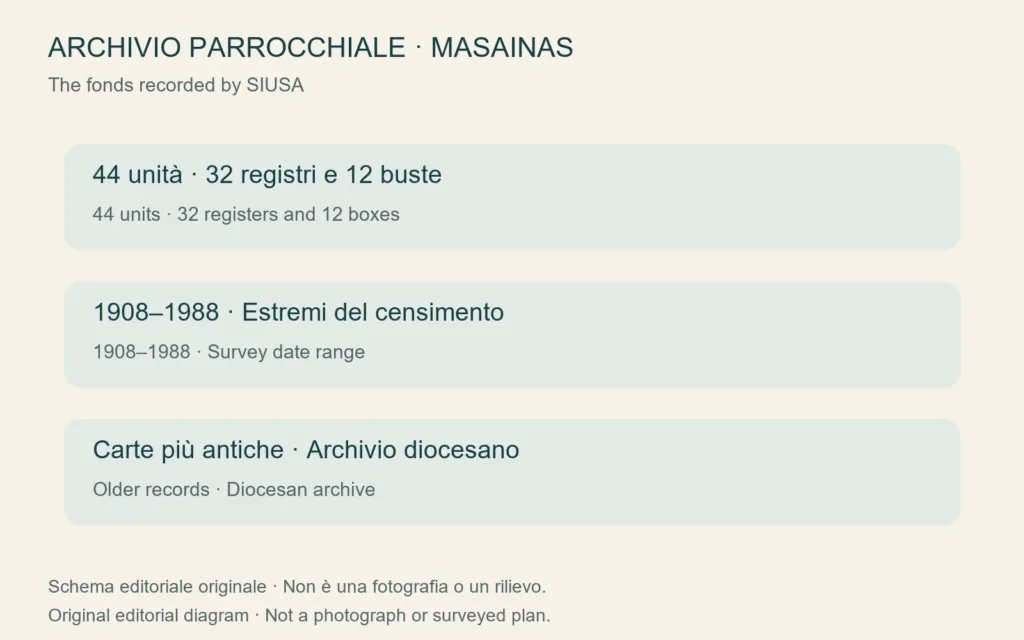
The fonds described by SIUSA contains parish registers and marriage files. The entry records forty-four units: thirty-two registers and twelve archival boxes, with a stated date range of 1908–1988. It also explains that the later date refers to the most recent survey. Consequently, 1988 should not be read as the date when the parish closed or permanently stopped producing records. It marks the extent of the documentation as described by that particular inventory exercise.
Older parish documentation was transferred to the diocesan archive. For anyone researching an individual or a family event, this changes where an enquiry should begin. The absence of a document from the local fonds does not establish that it never existed. Researchers need to distinguish the institution that created a record from the repository now responsible for keeping it, then discuss their enquiry with the relevant custodians.
Registers and boxes also represent different kinds of organisation. A register gathers entries within an ongoing structure, while a file can bring together several documents associated with a procedure. The number of archival units therefore says little about the total number of people mentioned. The 1988 survey list, identified as an internal finding aid, helps users navigate the collection. Its existence does not mean that all records have been digitised or that consultation is available immediately on arrival.
Planning a visit or an archival enquiry
The directory's San Giovanni Battista entry for Masainas locates the church. For access to the building or an archival request, contact the parish through the Diocese of Iglesias directory and explain which activity you are interested in. Service times, the availability of someone to accompany a visitor and access to records are separate matters. A public religious celebration is not an appointment to consult historic registers.
A researcher can prepare names, approximate dates and the type of event being investigated before making contact. An architectural visitor can focus instead on the relationship between nave and chapels, while respecting worship and other parish activities. Both approaches benefit from the same discipline: a proposed date remains provisional, and an inventory's chronological limits do not contain the whole history of a community. Read together, the structure and its surviving documentation give this Masainas church a much more precise identity than either could provide alone.