
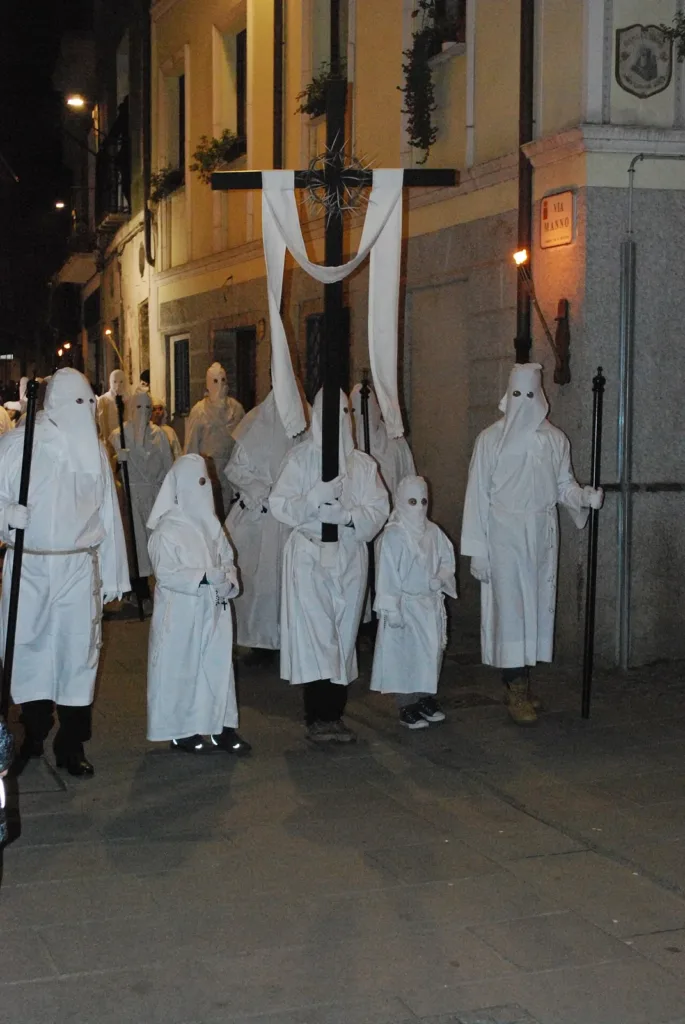

During Holy Week in Iglesias, the streets of the historic centre become part of a celebration in which clothing, gestures, sounds and objects carry specific meanings. White hooded figures are its most recognisable visual sign, but they do not explain the entire ritual. Following events attentively is easier when visitors know the names of some participants and understand the different moments leading the city towards Easter.
This is a guide to the tradition, not a timetable for a forthcoming edition. Check dates, times and routes each year with the Arciconfraternita del Santo Monte and the city's tourism channels. The procession photographs reproduced here were taken in March 2013. They document real events from that year without promising the same arrangement of participants or the same street route in a later edition.
San Michele as a reference point
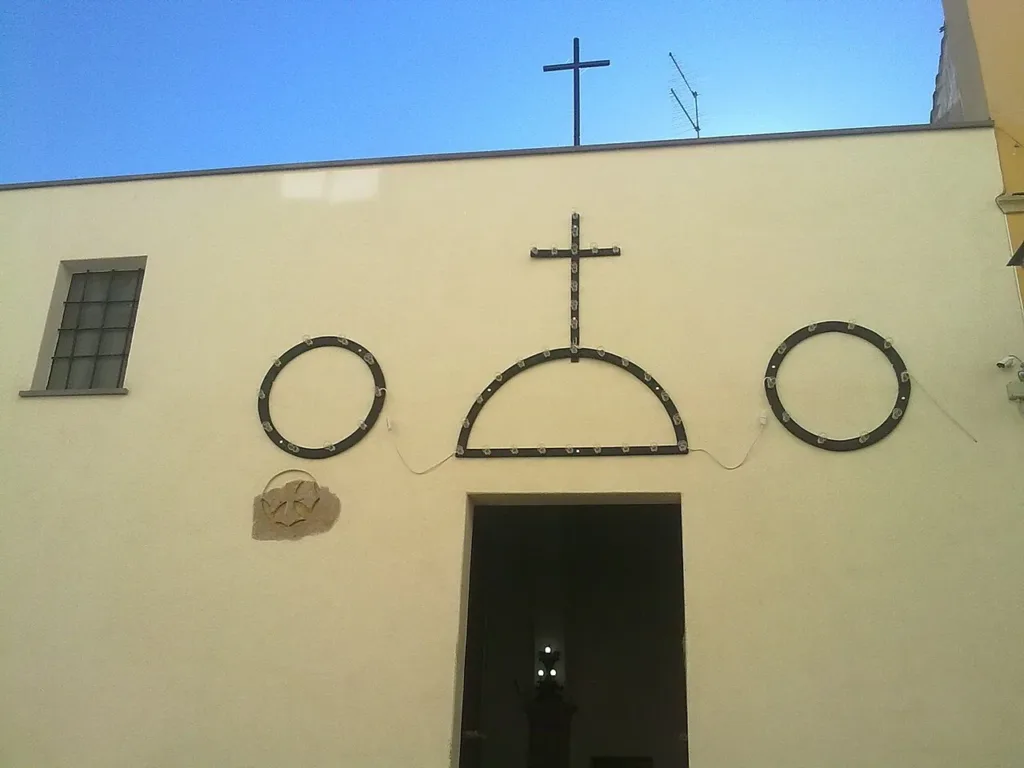
San Michele church is closely associated with the confraternity and many of the rituals. Iglesias Turismo describes the oratory as a departure point for processions recalling the Passion. Its façade, shown here in a photograph from 2016, gives a recognisable physical setting to the names in the programme. The building is more than a backdrop: it connects the confraternity's activities with the city's everyday streets.

For geographical orientation, the Santa Chiara Cathedral directory entry provides another reference. The cathedral was among the stops listed for the Procession of the Mysteries in the regional programme for 2026. It is the map point associated with this article, rather than the location of every ceremony. A map of landmarks and the annual procession route answer different questions and should be read accordingly.
Recognising Baballotti and Germani
The tourism service distinguishes the Baballotti, participants wearing white tunics and face-covering hoods, from the Germani, members of the archconfraternity. The latter name derives from the Spanish hermanos, meaning brothers. Their clothing includes black details against white fabric. Recognising this distinction makes the procession easier to understand as an organised community, rather than treating every garment as interchangeable visual decoration.
The participation of adults and children also expresses transmission between generations. The confraternity presents popular involvement as an essential part of the tradition, rather than a performance created solely for visitors. For an observer, this suggests a considerate way of standing beside the route. Keeping passages clear and respecting periods of recollection acknowledges the religious purpose of the gathering, whether or not one shares the participants' faith.
Different moments within the week
The confraternity's account places the Procession of the Mysteries on Tuesday, with seven sculptures presenting the Passion. Thursday accompanies the Virgin of Sorrows. Friday includes the Procession of the Mount in the morning and the Descenso in the evening. These names do not describe repeated versions of one identical procession: they refer to different episodes and emphases within a shared ritual sequence.
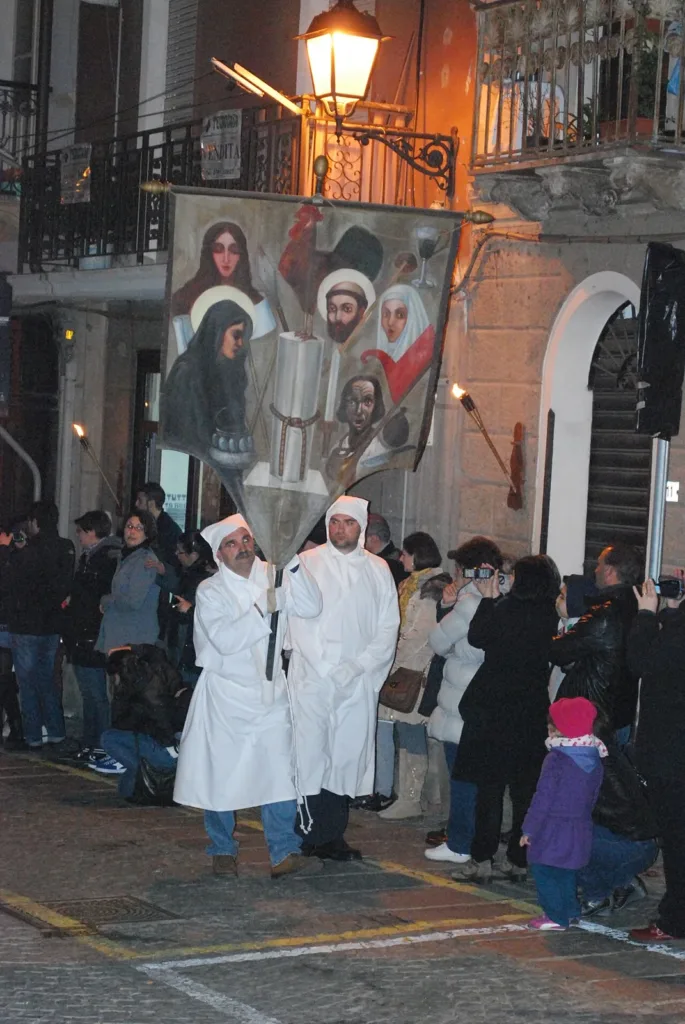
A useful way to read the programme is therefore to connect each title with its narrative moment before deciding where to watch. The opening photograph records Maundy Thursday in 2013, while the banner photograph belongs to Friday. Placing them together in an article does not turn them into a continuous report. They come from different days and help identify features of the tradition rather than reconstructing one procession minute by minute.

The Descenso and its banners
SardegnaCultura identifies two large banners known as Is Vexillas within the Descenso, carrying images and symbols of the Passion. Friday evening centres on the remembrance of Christ's funeral. The cloth banners visible in the photograph belong to that narrative language; they are not simply civic flags. Figures and objects in the procession gain their significance through their relationship with the religious episode being recalled.
When planning to attend, read the current programme, check for changes and choose a position that leaves room for participants and residents. Avoid crossing through the procession to pursue a photograph, and do not infer present-day timings from archive images. Holy Week in Iglesias becomes more understandable when its different ceremonies are followed as connected but distinct moments, allowing names, symbols and collective participation to shape what you notice.