
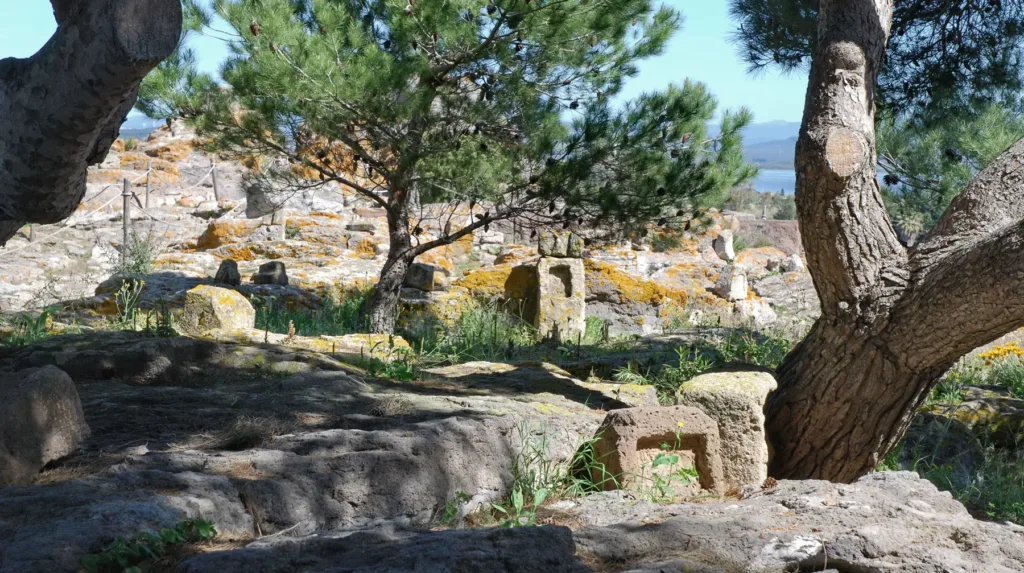

The Sant'Antioco tophet is an open-air sanctuary in which rock, ceramic vessels and stone monuments need to be understood together. It does not resemble a classical temple with columns and a roof. Its significance emerges through the relationship between a defined space, repeated deposits and ritual practices. This organisation, more than a single monumental building, makes it an important witness to the Phoenician and Punic city and to particular activities carried out by its community.
The Sant'Antioco tophet directory entry identifies its location. The site lies in the northern part of the modern settlement and occupied a peripheral position relative to the ancient town. Peripheral does not mean unimportant. A ritual area may be separated from housing precisely because of its particular purpose. Its distance from residential space is therefore part of interpreting the sanctuary, rather than an incidental detail on a map.
Rock and the local memory of pots
The local name Sa Guardia de is Pingiadas preserves the memory of the numerous vessels that emerged in the area. Municipal documentation connects this name with the presence of cremation urns. It illustrates how local memory can register a material feature before a developed archaeological explanation exists. The reference to pots recalls what people saw, while understanding the containers' ritual role requires examination of the objects themselves and of the contexts in which they were found.
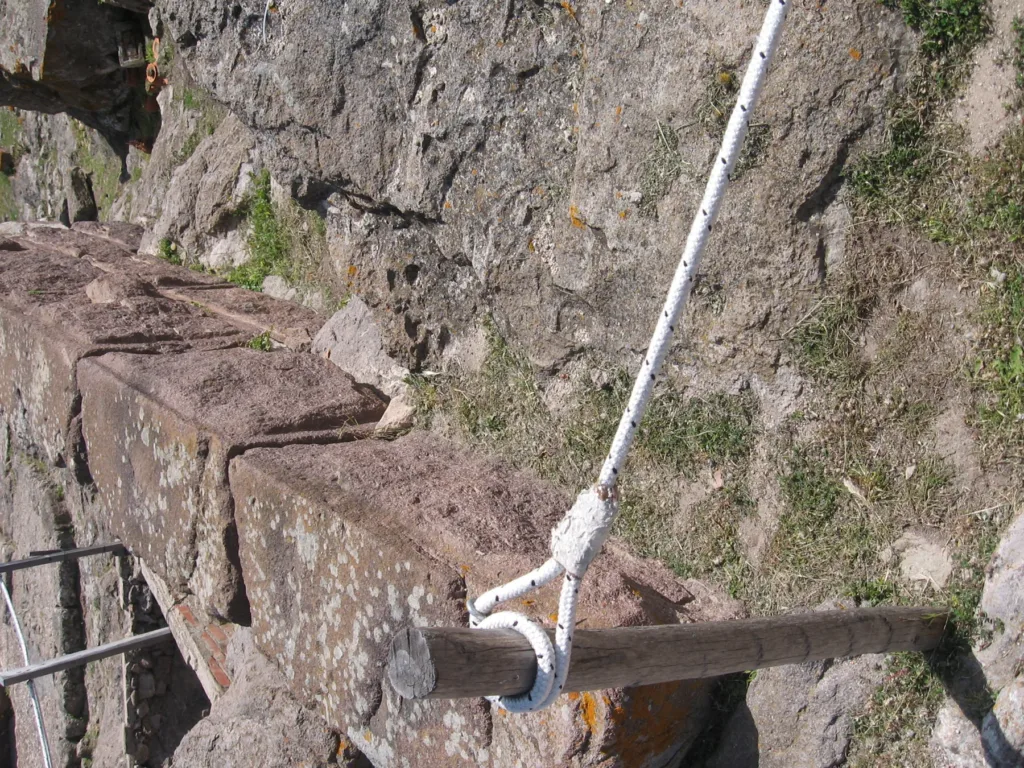

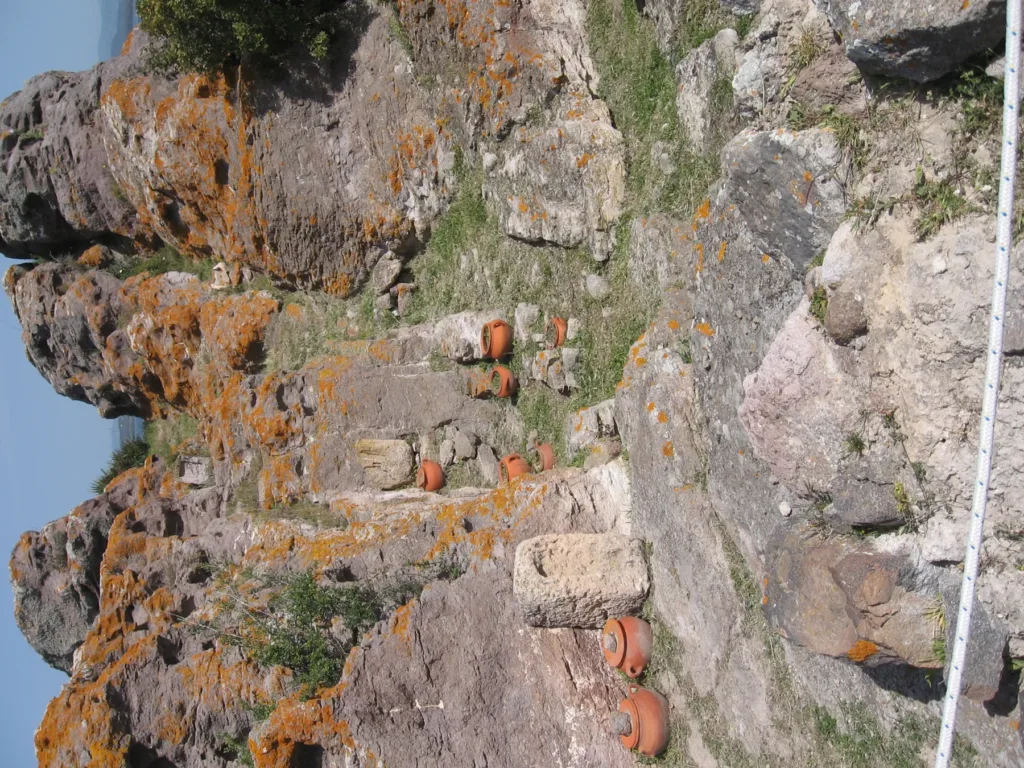
The photographs show irregular outcrops, cavities and changes in level. Vessels were also deposited in natural spaces within the rock, so the landscape was more than a background to ritual activity. It provided surfaces and crevices used for deposits. This relationship helps explain why an isolated photograph of an urn cannot convey the site's entire significance. Position, neighbouring objects and changes to the surrounding area through time all contribute to archaeological interpretation.
A long history rather than one moment
The municipality's 2025 brochure describes use from the eighth to the first century BCE. Such a long interval calls for thinking about successive actions and transformations, rather than a setting arranged once and left unchanged. The documentation distinguishes enclosures and different phases. Without an interpreted plan, individual visible walls should not be assigned precise dates casually. What matters initially is recognising that the sanctuary developed over time and cannot be reduced to a single frozen scene.
The urns held burnt remains of children and, in some cases, small animals, alongside objects connected with ritual practices. A vessel is therefore a complex source of evidence: its ceramic form, contents and placement answer different questions. The photographs presented here illustrate the accessible area and vessels visible among the rocks. They are not images of laboratory analysis. On their own, they cannot establish the ages of the deceased or explain how those individuals died.
Stelae and the question of interpretation
Stone stelae appear alongside the deposits and may carry figures or symbols. Reading them requires attention to form and context, rather than automatically translating every image into a narrative scene. A carved figure is not necessarily a portrait of the person commemorated. Museum collections preserve many examples from the tophet and allow closer observation of details that may be less legible outdoors, or that are no longer represented by objects remaining in the excavated area.
Interpretations of the rituals have generated a long debate. The municipal sources consulted emphasise how osteological analysis has informed the understanding of infant deposits and discuss the earlier portrayal of the site as a place of systematic sacrifice. Responsible presentation distinguishes observed remains from hypotheses about the actions that produced them. A specialist controversy should not become a dramatic certainty, nor should an identical explanation be assigned to every deposit without considering its particular archaeological context.

Connecting the site with the study of its objects
The Ferruccio Barreca Archaeological Museum includes the tophet in its account of the ancient city. That connection helps visitors investigate the material, while the outdoor site explains its position in the landscape. This article does not reproduce a complete museum tour. Its focus remains a sanctuary where deposition, remembrance and relationships with the sacred were intertwined. The museum and the site offer complementary ways of understanding those practices, rather than two interchangeable versions of the same experience.
Before going, check current access arrangements with the historical archaeological park and the municipality. Times listed for a past event are not permanent opening hours. Following the designated route allows observation without approaching objects inappropriately. The tophet also calls for a respectful perspective because of the evidence it preserves. Behind the urns and stelae are more than archaeological classifications: there are practices through which a community responded to loss and gave meaning to death, interpreted through material that still requires careful study.