

A bell telling people when to return home, goods requiring supervision and officials with defined duties: medieval Iglesias can be approached through these small details. They survive in the Breve di Villa di Chiesa, the statute of the old mining town. Its importance goes beyond famous individuals and military conquests. It shows which actions the authorities wanted to regulate, and which concerns they considered important enough to record in a lasting written form.
The manuscript is held by the Municipal Historical Archive. To find your bearings in the historic centre, use the Piazza Municipio directory entry, the geographical reference associated with this article. The Museo del Breve has a separate address: Vico delle Carceri 12, at the Archive. The square's map marker is therefore a starting point for orientation, rather than the museum entrance or the precise position of the manuscript inside the building.
A text assembled over time
The surviving version dates to 1327, in the context of the transition from Pisan to Aragonese rule. It brings together legislation developed through earlier stages. References to older versions, noted by the Archive in its presentation published by the Pro Loco, show why it should not be treated as a set of rules invented from scratch at one particular moment. The date identifies surviving evidence, rather than the beginning of every custom recorded within it.

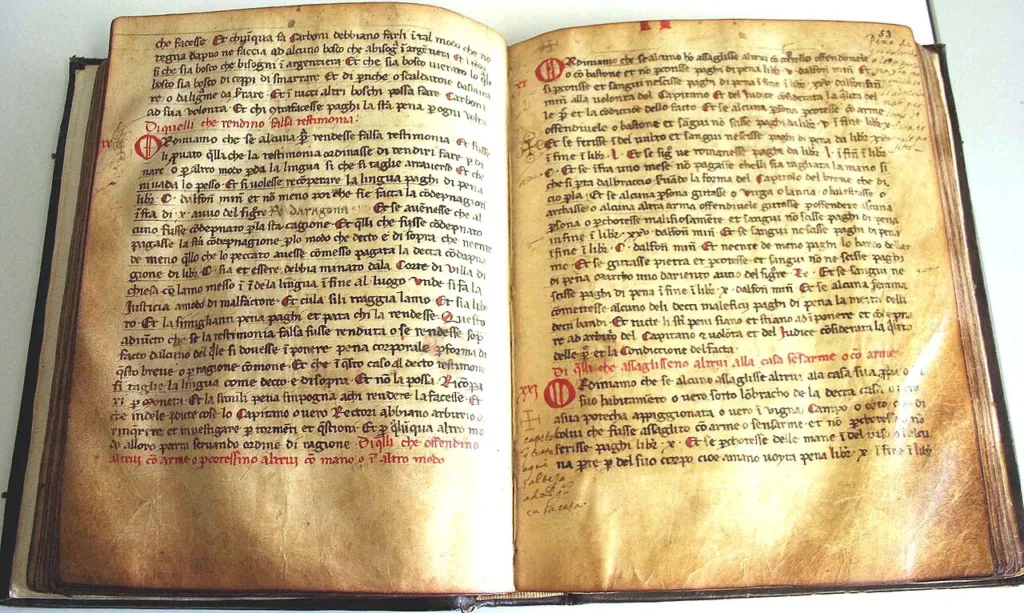
The manuscript uses the Pisan vernacular and a Gothic book hand on parchment. In the photograph of the open pages, dense lines, prominent initials and red marks interrupt the dark field of writing. Even without deciphering each word, a reader can recognise these visual divisions. Understanding abbreviations and precise meanings requires transcriptions and specialist scholarship; the photograph provides an introduction to the material object, rather than a substitute for that work.
Four books serving different needs
The volume contains four books. The first deals with public institutions and officials, the second with criminal procedure, offences and punishments, and the third with civil, administrative and fiscal matters. The fourth addresses mining. This arrangement makes the connection between government and production immediately apparent. Extraction was sufficiently important to require its own body of provisions within the town's broader legal framework.
A useful starting question is how a community organised itself when part of its wealth depended on what lay underground. The fourth book considers officials' duties and the rights and obligations associated with deposits and mineral trading. It should not be turned into a modern technical handbook. Its value lies in showing that mining work involved coordination, supervision and identifiable legal relationships, alongside the physical effort of extracting material from the earth.
When the evening bell sounded
The Municipality's introduction mentions provisions covering markets, gambling and movement after dark. Following the third evening bell, people could no longer simply wander through the streets. This is a striking example of sound organising collective time. A written requirement became something inhabitants could respond to through a signal heard in the town, connecting the authority of the page with the experience of the street.
A statute is nevertheless not a complete picture of everyday life. Prohibiting an action does not establish how frequently it occurred, or how every resident responded to the restriction. Reading the Breve involves separating the intentions of government from individual experiences. That distinction makes the document more interesting, rather than less useful: it provides questions for further investigation as well as information that can be read directly from its provisions.

Three images and a history of transmission
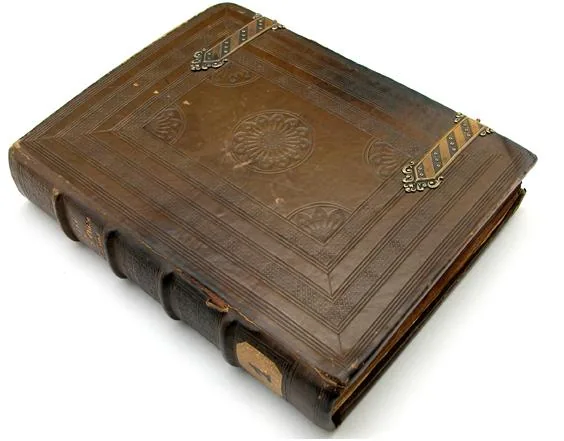
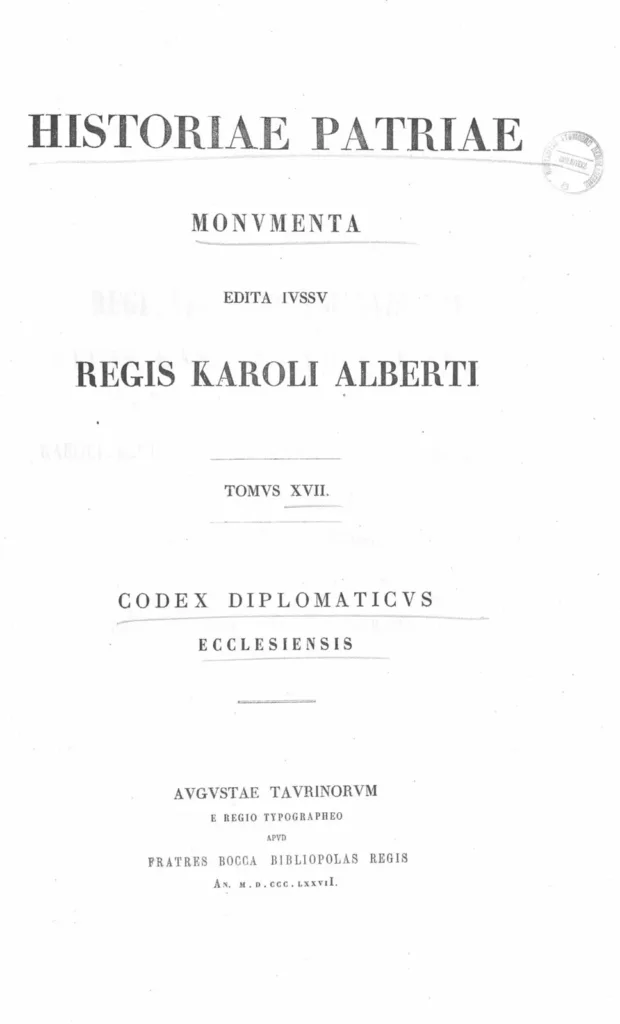
The illustrations show pages from the manuscript, its cover and the title page of the 1877 printed Codex diplomaticus ecclesiensis. According to the Geomining Park, the binding now associated with the manuscript was added in the late eighteenth century. The nineteenth-century edition, connected with Carlo Baudi di Vesme's scholarly work, represents a different stage in making the text available. These are not three contemporary medieval objects: they reveal successive moments in preservation, interpretation and publication.
The municipal announcement for the museum's opening in May 2022 described a multimedia display and a limited period during which the original would be exhibited. Check current opening arrangements and whether the manuscript or a reproduction is on view before travelling. The medieval walls offer a separate introduction to the physical town. The Breve provides access to another aspect of Iglesias: the written rules through which its community sought to organise public and private life.