
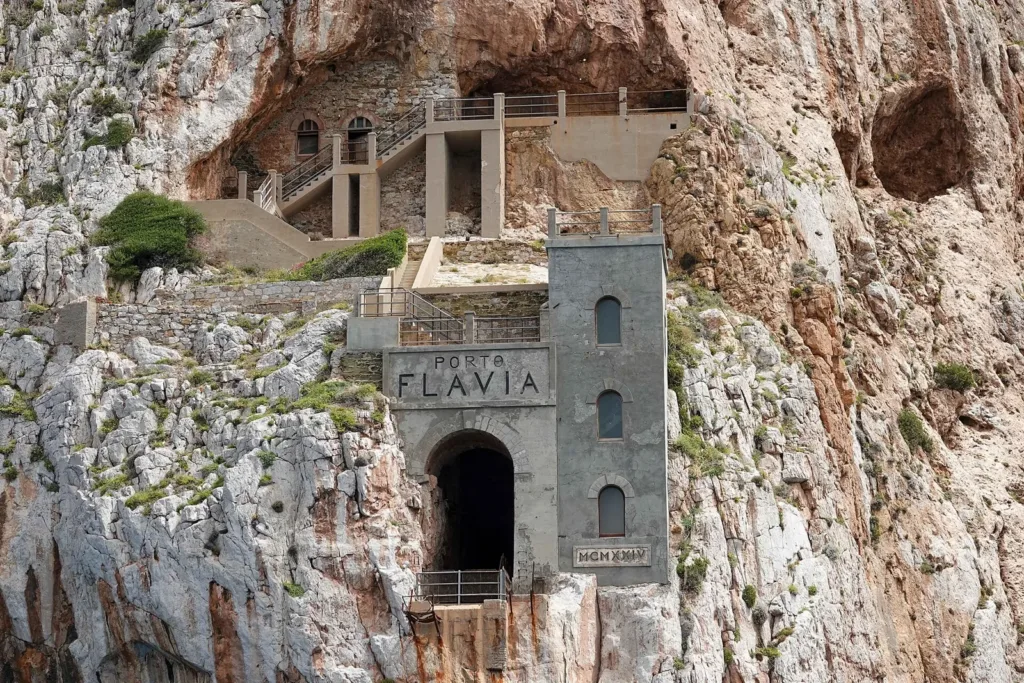

At Porto Flavia, the most interesting question is not simply how a building was opened into a cliff face. It is what problem the installation was designed to solve. This industrial monument at Masua, in the municipality of Iglesias, transferred mineral cargo towards ships. Understanding it as transport infrastructure makes sense of the tunnels and internal spaces, as well as its celebrated opening above the sea.
The distinction matters: Porto Flavia was not where ore was extracted from a deposit. It was where material arriving from mines was gathered and loaded for shipment. A visit becomes easier to follow when you trace that transfer, imagining the direction of the cargo rather than treating each space as an unrelated underground chamber.
Three operations inside the rock
SardegnaTurismo's account can be understood through three operations: arrival, storage and loading. Two tunnels at different levels were connected through large storage silos. Material reached the upper level, was held in storage and passed to the lower transport system. A conveyor and a movable arm then allowed the cargo to reach ships directly.
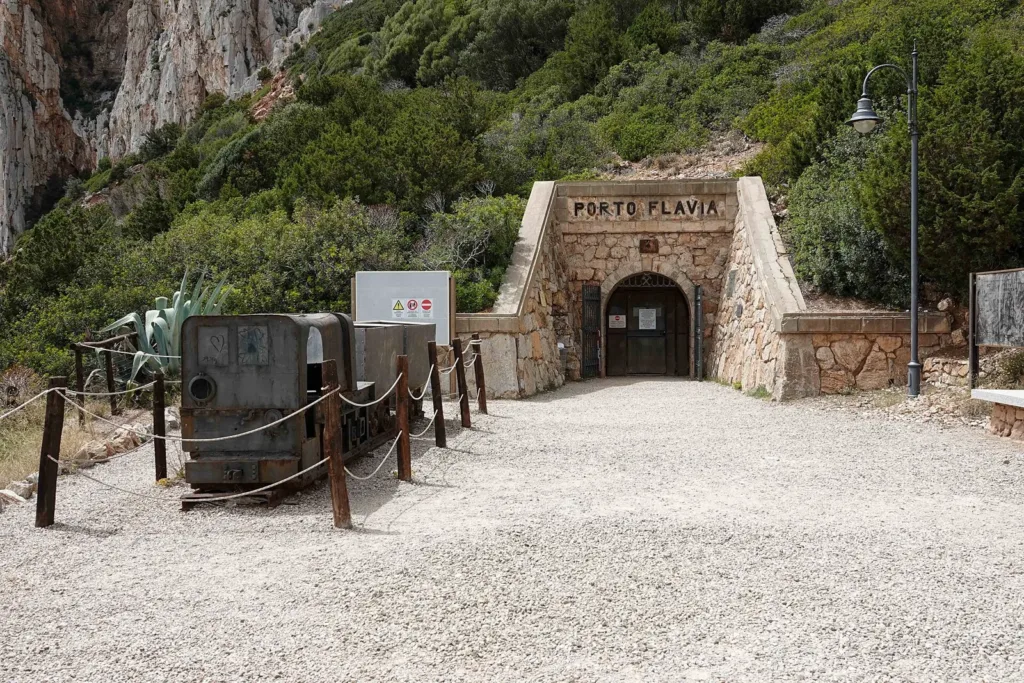

To remember the arrangement, picture a horizontal line, a downward movement and a second line heading towards the sea. This is a reading aid rather than a technical plan. It helps explain why different levels and storage spaces belonged to a single design. As your guide describes the installation, try placing each element within that sequence instead of memorising a list of separate names.
Storage is easy to overlook when attention is concentrated on the famous facade. Ask instead why the arrival of material needed to be separated from the moment it was loaded aboard a ship. A transport system involves more than movement: it must also accommodate material waiting for the next operation. This provides a useful way to approach industrial heritage without needing specialist knowledge of machinery.
A design connected to its coastal setting
The installation was built in the 1920s to a design by Cesare Vecelli and named after his daughter Flavia. The regional tourism account describes the earlier use of sailing vessels to carry minerals towards Carloforte. That comparison highlights the change introduced by the port: fewer handling stages between material already extracted from the ground and the ship carrying it onwards.
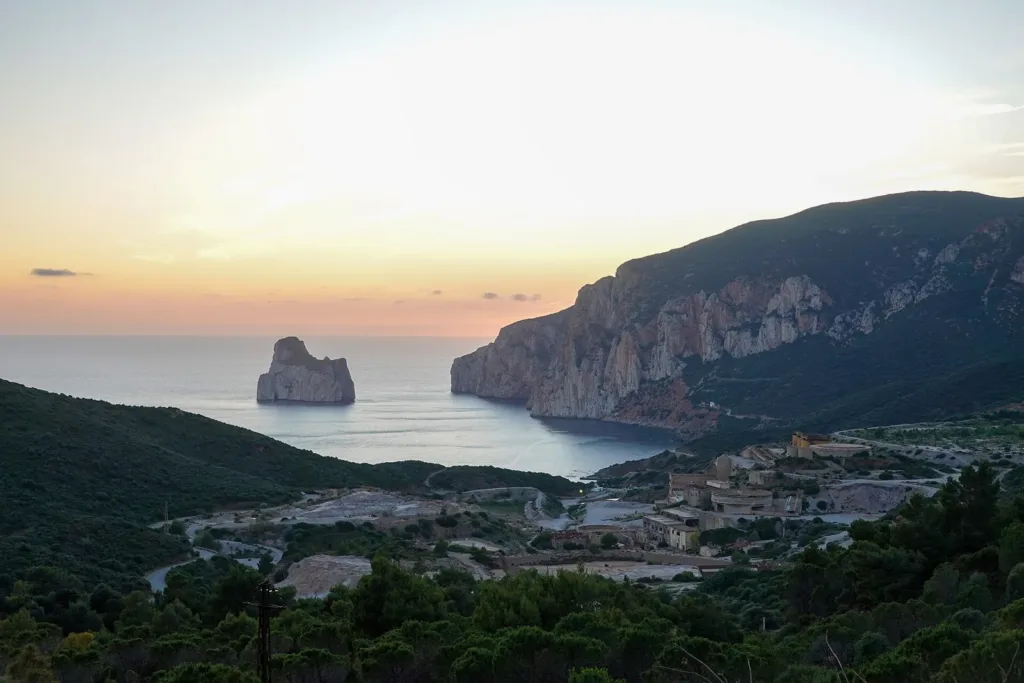
At the seaward opening, consider the relationship between the structure and the position a vessel would have occupied. The rock face is not simply scenery. It shapes how the installation appears to visitors. A close photograph of the facade and a wider coastal view therefore explain different aspects of the same place: the built detail and its setting within the coastline.
There is no need to assign a function to every opening based on appearance alone. Some features require an explanation or a technical drawing. A useful question for your guide is which elements are original, which have been restored and which support present-day visits. This helps distinguish the historic working installation from the arrangements that allow the public to experience it today.

What to check before booking
Use the official Iglesias Turismo page for current visitor arrangements. Entry is organised through guided visits with limited admission, so choose a time before planning the rest of your day. Confirm the language of your tour, particularly if some members of your group do not understand Italian. Finding English information online is not the same as securing a tour in your preferred language.
The operator distinguishes the upper tunnel from access to the lower area through a long staircase. Before buying tickets, ask which sections will actually be included on your chosen date, especially if stairs present a difficulty. A general description should not be treated as a personal accessibility guarantee. Explain your requirements and ask for details of the route expected to operate during your visit.
From your reservation to the entrance
The operator requires closed, comfortable shoes and clothing appropriate for a museum site. Prepare for a guided industrial visit even if your day also includes other stops along the coast. Check current arrival instructions, the meeting point and how early you should report. Keep your ticket available in a form that does not depend on having a mobile data connection at the entrance.
Our Porto Flavia listing on the map helps locate the destination. Allow separately for travelling to the site and taking the tour. Your reserved time is an admission reference, not a suggested departure time from your accommodation. If several people are travelling independently, share the meeting point before setting off so that everyone is planning towards the same destination.
Photograph the work as well as the view
The coastal opening naturally draws cameras towards the panorama. To tell a fuller story, consider pairing that image with a detail from the permitted route that helps explain the installation's purpose, following staff instructions throughout. In your caption, identify it as a mineral-loading port. A short, accurate description gives the photograph a connection to the work once performed here.
For a different kind of underground experience, our blog has a separate guide to Santa Barbara Cave. At Porto Flavia, keep following the cargo: where it arrived, where it waited and how it reached a ship. Those three questions turn a familiar scenic image into an industrial installation whose purpose you can understand.