
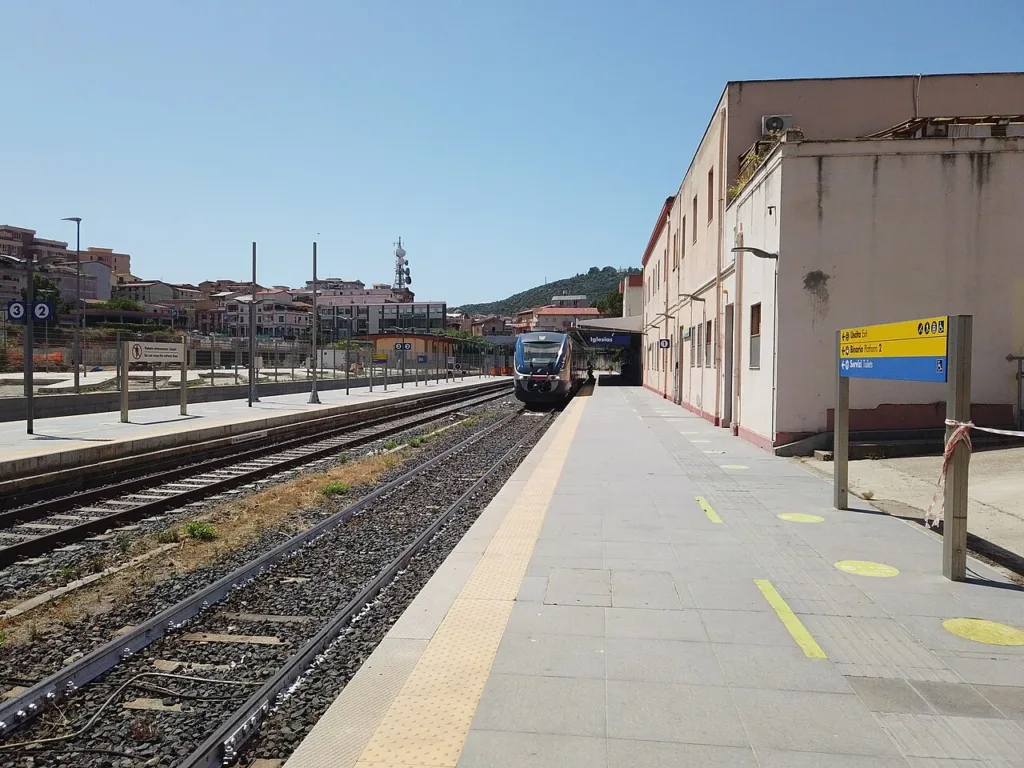

Iglesias station records the relationship between a mining town and the transport network connecting it with the rest of Sardinia. Its passenger building, platforms and tracks form a setting designed for arrivals and departures, distinct from the places where minerals were extracted. Looking closely separates the infrastructure from an individual service. A station retains its history even when engineering works temporarily change the way passengers reach it and continue their journeys.
The Piazza Sella directory entry provides a reference within the urban area associated with this article. Its marker identifies the square, not the station. To reach the railway premises, look for the Via Garibaldi entrance and consult railway directions. Keeping those references separate avoids treating a town-centre point of interest as though it were a replacement-bus stop or a direct access point to a railway platform.
The nineteenth-century railway in official records
The Italian State Railways' 1923 operating statistics list the Iglesias–Decimomannu line with its sections opening in 1872. The same table includes Monteponi–Iglesias, opened in 1898. They are separate entries: the first places Iglesias within the network towards Decimomannu, while the second records a connection with the mining area. Reading the table establishes a sequence without assuming that every track around the station originated in the same construction campaign.

This publication is an administrative record of the network at that time, not a timetable for present-day travel. It shows that the station served different connections beyond the straightforward departure of a passenger for another town. The mining connection belongs to transport history and should not be assumed to remain operational. A line name preserved in an archive must be distinguished from destinations currently available through a transport operator's booking system.
From passenger building to railway platforms
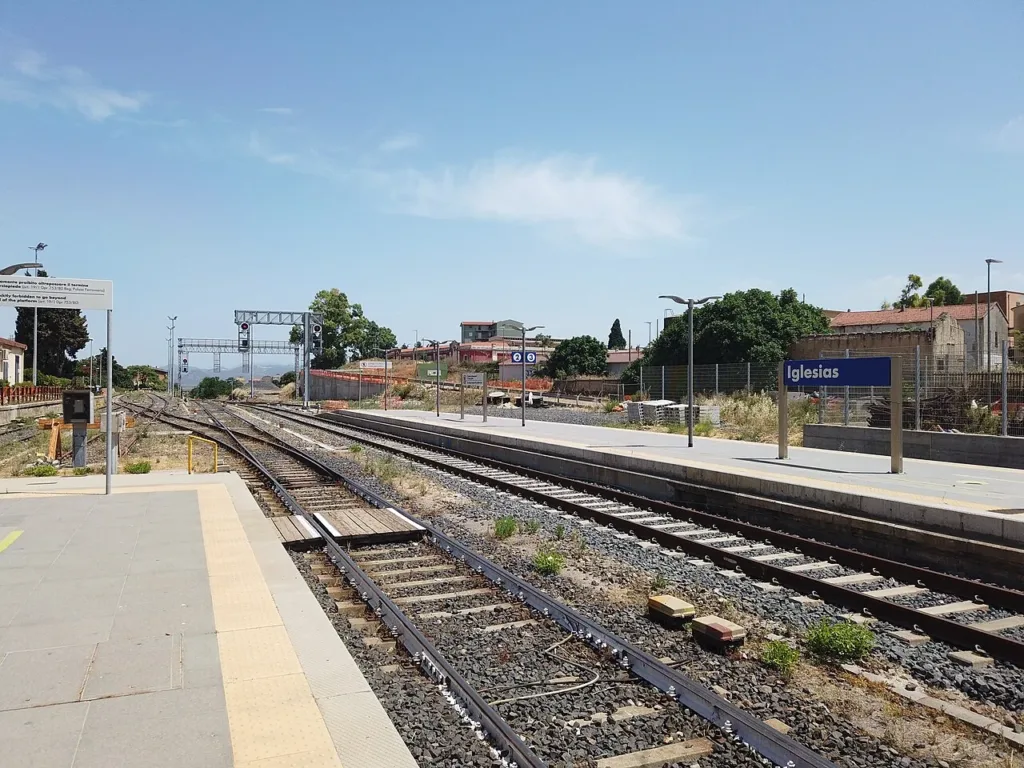
In the 2022 photograph, the passenger building extends alongside the platform, with repeated openings facing the tracks. A yellow line and the paving visually separate the waiting area from the platform edge. The Iglesias nameboard in the second image performs a basic but important function: it identifies the place for arriving passengers before they leave the railway environment and emerge onto the streets of the town outside the station.
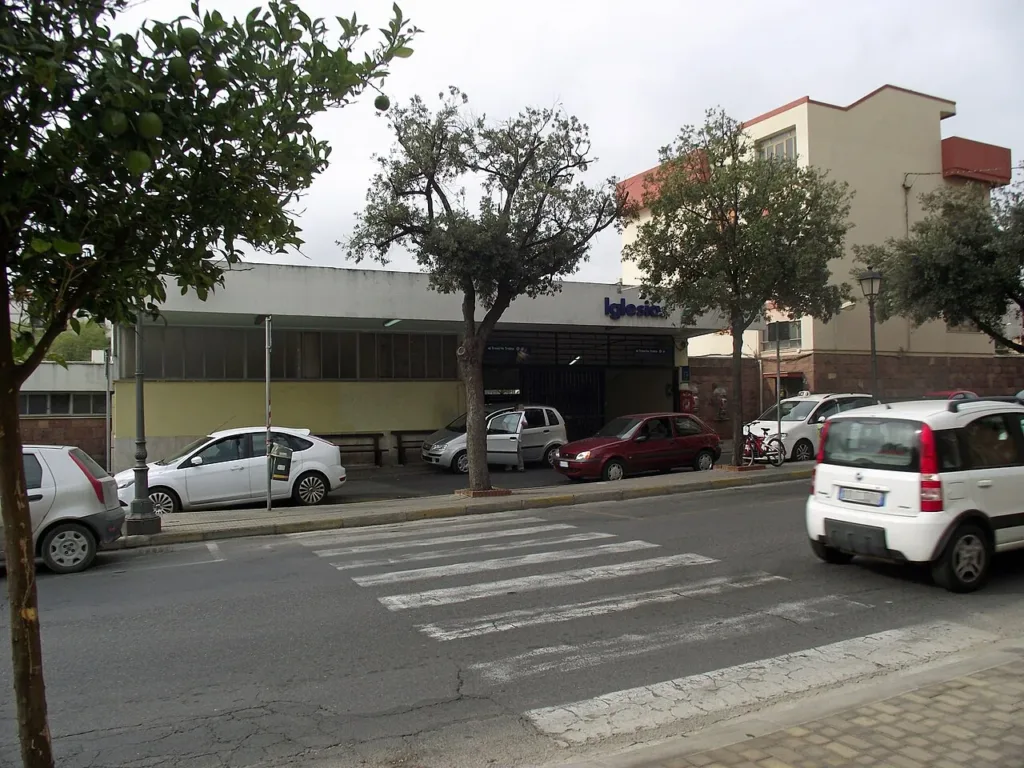
The third photograph looks towards the urban side, where the station name appears on the building and a pedestrian crossing connects the entrance with the surrounding street. Together, the views describe different stages: recognising the station, waiting beside the tracks and leaving the premises. They do not establish a compulsory access route or replace signage displayed during engineering works, when the paths actually available to passengers may differ from those shown.
Information for travellers with accessibility needs
RFI's Iglesias station page, checked on 23 September 2026, lists three passenger tracks and facilities including tactile routes, raised platforms and visual and audible information. It also states that assistance for passengers with disabilities or reduced mobility is not available at this station. Physical facilities and an organised assistance service are different kinds of provision. The presence of one does not establish that the other can be arranged for a particular journey.
Before travelling with specific requirements, consult the official station information and contact the transport operator about the actual service you intend to use. During a railway closure, the accessibility of the replacement vehicle and its stop also matters. A photograph showing a platform cannot establish the specifications of a bus or confirm how assistance will be provided on that particular departure, date or connecting service.

Services during the 2026 engineering works
As checked on 23 September 2026, RFI reports the line interrupted from 1 July 2025 until 31 December 2026 for infrastructure and technology works. A further notice, valid from 21 September to 31 October 2026, changes the times of certain buses between Decimomannu and Iglesias and places stops in station forecourts, subject to its stated exceptions. Travellers must therefore check their chosen bus and date instead of expecting a train because an earlier photograph shows one.
Keep the service number and confirm the boarding location, connections and updates shortly before departure. RFI's live monitor distinguishes current arrivals and departures from planned timetables; during works, consult notices and the operator's sales channels as well. The station can then be understood through two precise forms of evidence. Historic railway records explain the earlier network, while updated passenger information makes it possible to use the connection actually offered today.