
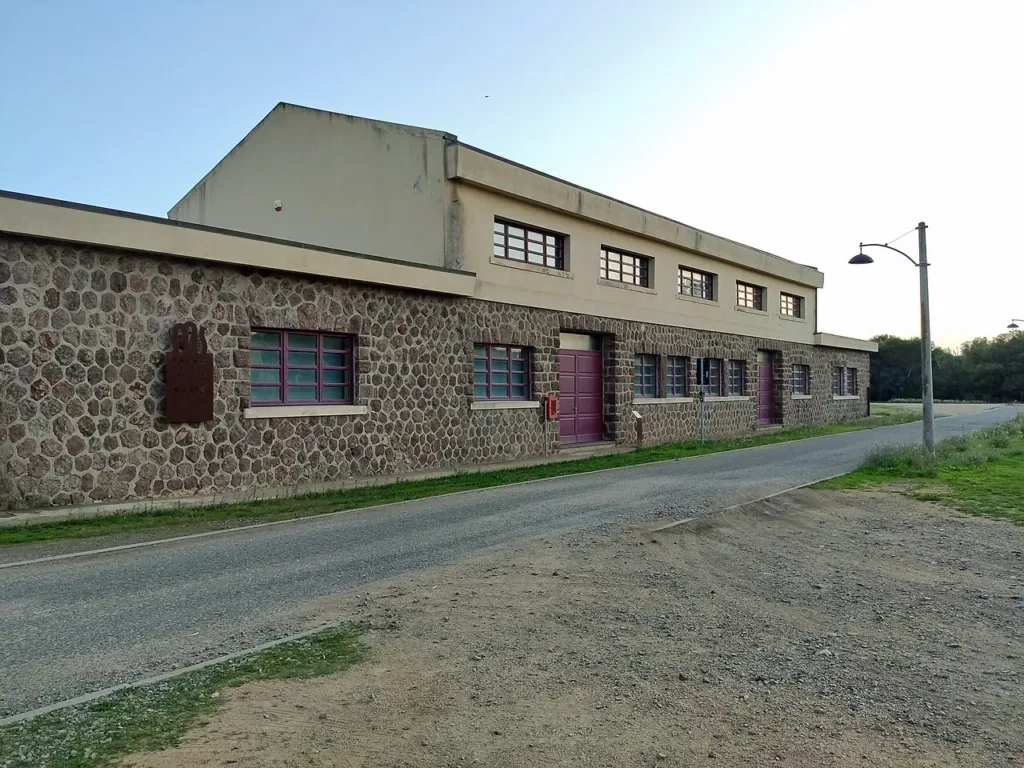

At the Museo dei Paleoambienti Sulcitani “E.A. Martel” in Carbonia, one useful question connects the display cases: what kind of landscape existed before the one we see today? Rocks, fossils and reconstructions offer evidence of vanished seas, extinct organisms and changes unfolding over periods far longer than human history. The abbreviation PAS refers to Sulcis palaeoenvironments: past environments reconstructed from the physical traces they left behind.
The museum occupies former mechanical workshops within the Grande Miniera di Serbariu complex. Use the PAS–Martel directory entry on the map to locate it. Several cultural institutions share this former industrial area, but that does not mean they have the same entrance, opening arrangements or visitor route. Identify the correct building and check the arrangements for your visit before travelling.
A local collection becomes a museum of deep time
The museum's beginnings date to 1972 and the work of Carbonia's “E.A. Martel” speleological research group. Its relationship with the municipality developed further in 1996 through the loan of the collection. Carbonia's museum service gives 2 June 2009 as the inauguration date of the new premises. These milestones describe a collection built through local participation and research before gaining spaces better suited to explaining its significance.
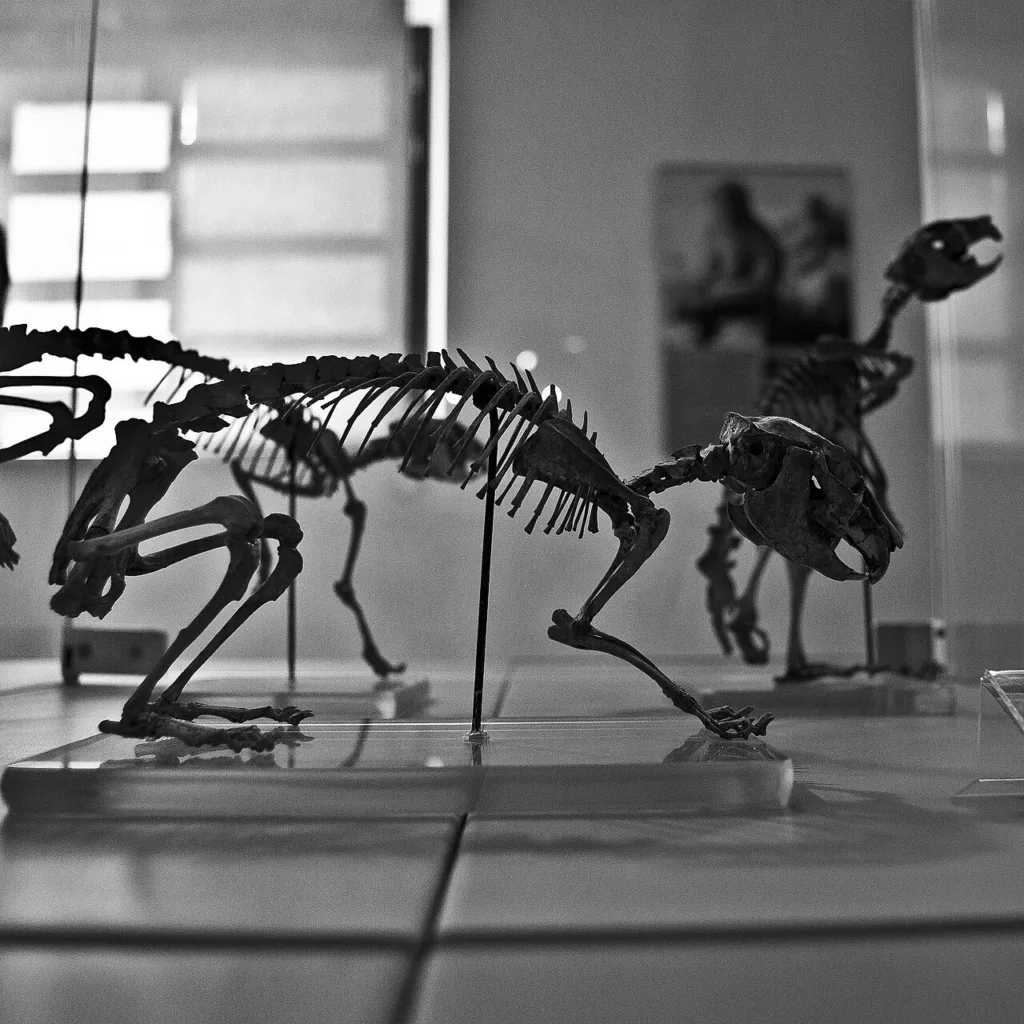

The industrial building introduces another timescale. Its proportions and structural framework belong to the relatively recent history of the city, while the objects in its cases refer to a much more distant past. Keeping these histories separate helps visitors avoid interpreting every exhibit through coal mining. The nearby Coal Museum has its own article about the experience of visiting the mining displays.
Two different ways to arrange the evidence
The section devoted to Sulcis-Iglesiente presents rocks and fossils in chronological order. The palaeobiodiversity section instead compares groups of organisms and includes material from other parts of the world. These approaches answer different questions. One follows the sequence of environmental change; the other makes it possible to compare the forms of organisms that lived in the past.
For each object, look for three pieces of information on its label: its name, origin and age. A fossil displayed in Carbonia was not necessarily discovered in Carbonia. Two objects placed next to each other may have been brought together for teaching purposes without ever belonging to the same habitat. Reading the labels before imagining a complete scene avoids misleading connections and gives the comparison a firmer basis.
The large dinosaur: distinguishing a model from an original
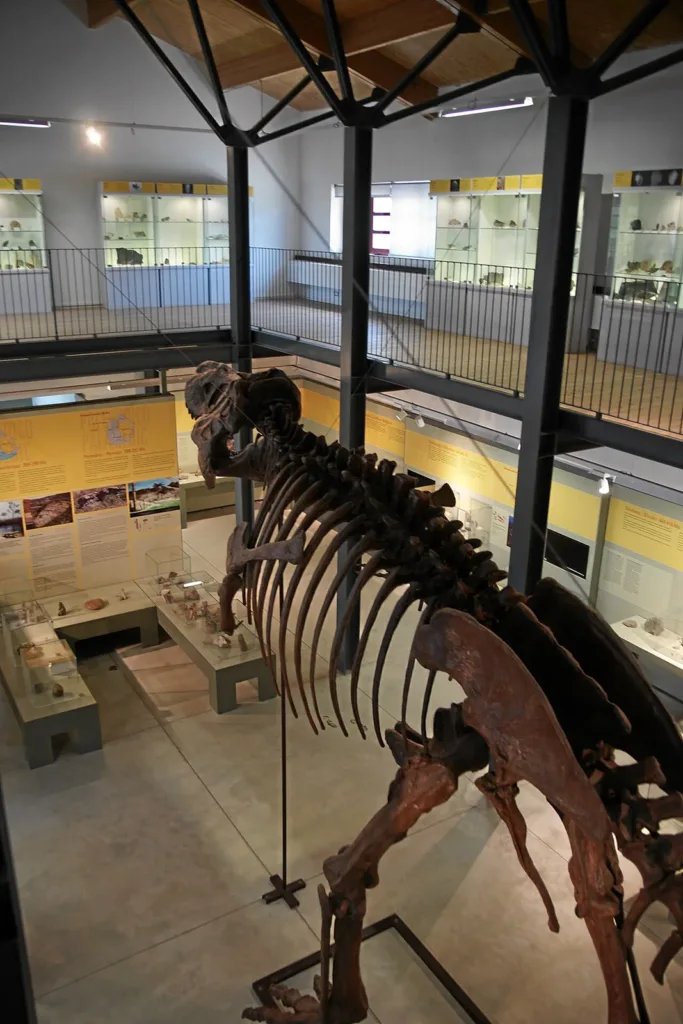
The full-size Tyrannosaurus rex skeleton is a reconstruction. A 2020 museum study by Daniel Zoboli and Gian Luigi Pillola identifies it as a resin model representing a North American dinosaur of the Cretaceous period. Its presence serves an educational purpose. It is not evidence that this dinosaur was discovered in Sulcis, a distinction particularly worth explaining when visiting with children.
A model communicates overall proportions and posture in a way that an isolated fragment cannot. An original specimen, meanwhile, preserves physical evidence that needs interpretation. Both can contribute to understanding: examine the whole display, then return to the label to establish what you are actually seeing. The archive photographs reproduced here show displays in different years, rather than confirming the present arrangement of every case.

Build the visit around comparisons
Instead of trying to memorise a succession of unfamiliar names, choose a comparison to follow: a small form and a large one, a bodily remain and a trace, or a local specimen and one from elsewhere. Ask what distinguishes them and what information is missing. Where an illustration reconstructs an environment, look for the objects supporting that interpretation rather than treating the scene as a photograph of the past.
A school group or family can also agree on a question before entering: how do we know where an object came from, or whether two animals lived at the same time? The answer may require several labels rather than one spectacular exhibit. This makes looking at the cases an active exercise, with a specific observation to discuss afterwards rather than a competition to cover every display as quickly as possible.
For organised activities, ask the museum which workshops suit the ages of the participants and which materials may be handled. Ordinary exhibits and designated tactile resources have different purposes. Check opening times, admission, access between levels and booking arrangements with the Carbonia museum service. Before leaving, revisit the specimen that raised the best question: explaining its origin, age and place in the display is a useful way to take something more lasting than a list of names home.