
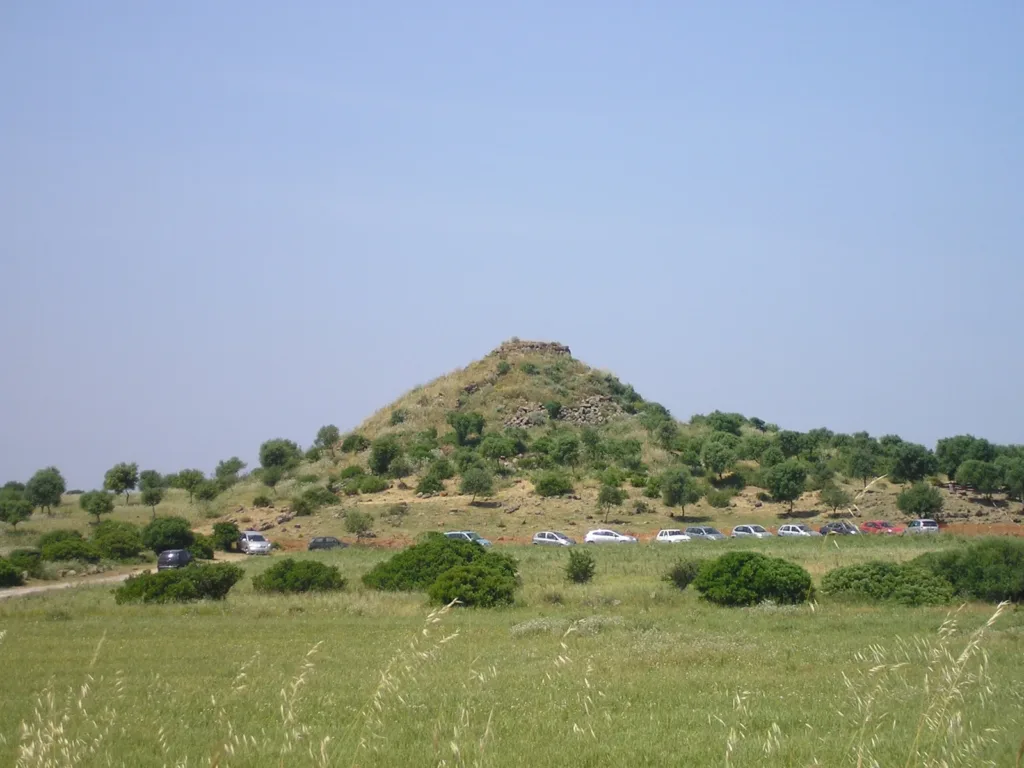

Nuraghe Sirai, in the municipality of Carbonia, preserves the history of a place where building, making things and living together required different kinds of expertise. Its towers immediately attract attention, but its interest extends beyond Nuragic architecture. A fortress developed around the older monumental core, and archaeologists have identified craft activities alongside evidence of interaction between Nuragic and Phoenician traditions.
According to the regional Virtual Archaeology project, the complex stands about one kilometre southeast of Monte Sirai. The two names refer to separate sites. Use the Nuraghe Sirai directory entry to locate the place discussed here. The settlement, burial grounds and tophet on the nearby plateau are covered in the separate article about Monte Sirai.
From a nuraghe to a fortress
The Ministry of Culture’s entry distinguishes the Bronze Age nuraghe from the village that developed mainly during the Iron Age. Between the late seventh and early sixth centuries BC, a new fortification incorporating earthworks was organised. Earlier elements continued to be used during this transformation. The round building with a basin, interpreted as a place of worship, was remodelled and given a decorative arrangement of small stone slabs laid in a herringbone pattern.
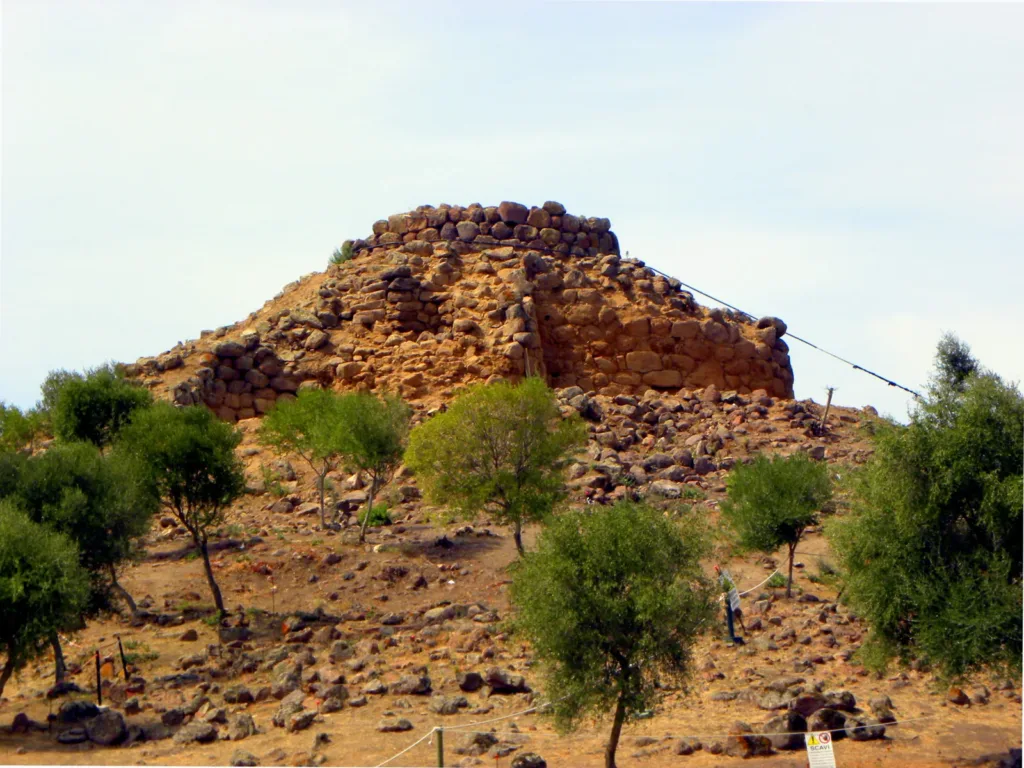


This sequence explains why “nuraghe” and “fortress” are not completely interchangeable labels. The first refers to the original monumental nucleus; the second includes a wider reorganisation of the settlement. In the close photograph, large blocks form an irregular mass, with fallen stone and vegetation. Not every room documented through excavation can be recognised in this view: the tower alone does not convey the whole system.
Cultural interaction recorded in pottery
In her study published in Layers, archaeologist Carla Perra dates the fortress to approximately 625–550 BC. The interpretation of an integrated community rests on several kinds of evidence: building arrangements, the proportions of recovered materials and archaeometric analysis. The latter identified a hybrid pottery tradition combining different practices, rather than simply reproducing two separate groups of products side by side.
That distinction matters. Finding an imported vessel demonstrates the movement of objects; identifying local production with combined characteristics also allows researchers to discuss the movement of skills. These observations answer different questions. The municipality’s account of the excavations brings architecture and pottery together to explain the interpretation of a mixed community. There is no need to invent conversations or undocumented biographies: interaction emerges from the materials and the organisation of space.
Glassmaking as a specialised craft
A study of Phoenician-Punic glass production, held in the University of Padua’s research repository, summarises the finds from the Nuraghe Sirai workshop: pink quartzite, shell remains, ash and installations for processes involving high temperatures. The workshop is dated to 600–580 BC. The authors report Perra’s interpretation that the activities included making raw glass, as well as working the material once it had been produced.
This interpretation concerns an important technical distinction. Melting ingredients to create glass involves different operations from reheating glass that already exists. Residues, installations and raw materials help reconstruct that sequence. The municipality presents the workshop as a central result of the excavations, alongside evidence of metalworking and pottery production. The fortress’s productive role therefore becomes tangible: its buildings were places for transforming materials as well as parts of a defended settlement.

Reading the reconstructed fortress
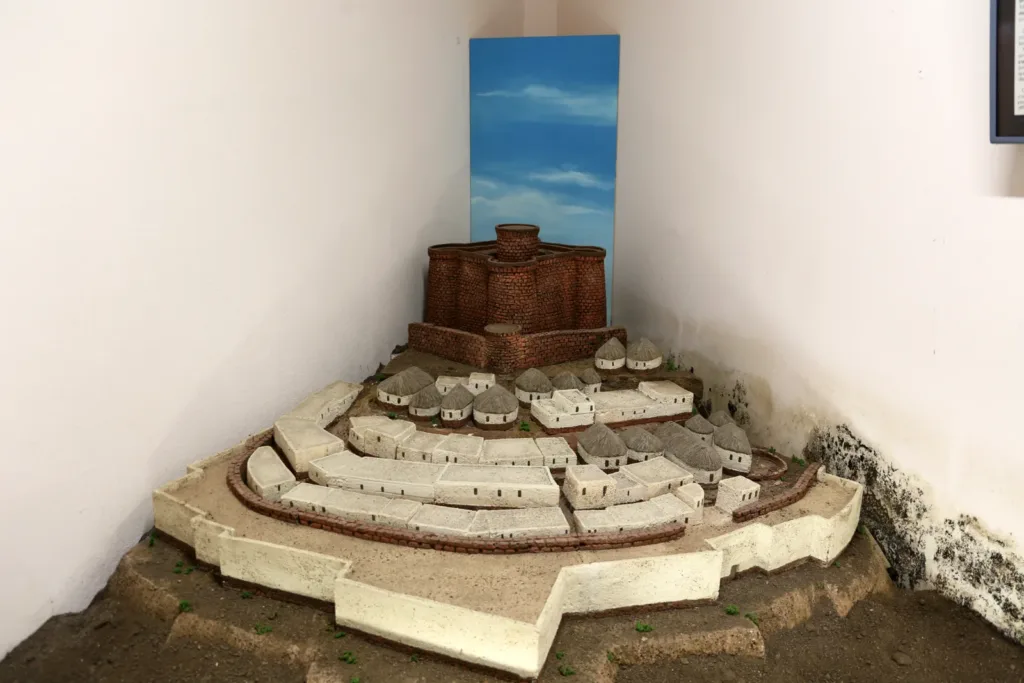
The photograph of the model displayed at Villa Sulcis presents a hypothetical reconstruction of the fortress around 550 BC. Its central structure, rooms distributed down the slope and outer bands following the hillside can be distinguished. The photograph of the ruins and the model serve different purposes. One records what survived when the picture was taken; the other makes an interpretation of the overall arrangement easier to understand.
The model is particularly helpful for considering differences in level. A building positioned lower down need not have been isolated from the upper nucleus: it could belong to the same organisation of the hillside. Reconstructed wall heights must nevertheless be distinguished from heights actually preserved. For the exhibition that houses this representation, see the guide to the Villa Sulcis Archaeological Museum. Visiting the museum and entering the excavation area are separate activities with separate access arrangements.
Confirm openings before travelling
When checked on 22 September 2026, the Carbonia museum network described Nuraghe Sirai as temporarily closed to the public, opening for events or special occasions. An ordinary daily visit should therefore not be assumed when planning your day. Ask the operator whether an opening is scheduled, which areas will be included and where visitors are expected to meet.
If a visit is announced, take a specific question with you: which features distinguish the older nuraghe from the later craft-producing fortress? That question connects the towers, pottery and workshop. Even when the site is inaccessible, the archaeological resources cited here make it possible to explore its history. Keep the excavated remains, scholarly interpretations and present-day admission arrangements distinct: each contributes a different part of the story.